The Story of USS Iowa
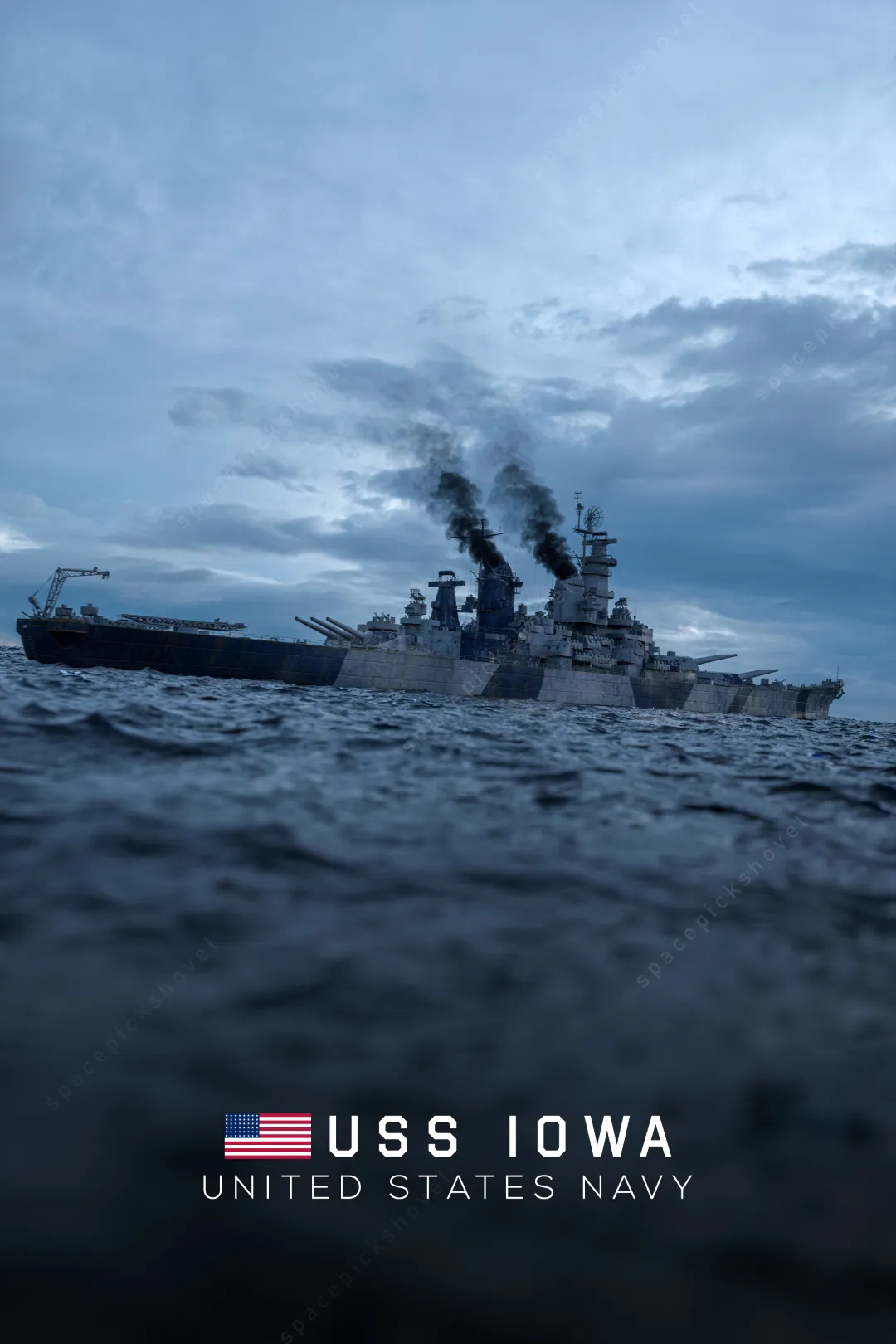
She was the lead ship of the most powerful class of battleships the United States ever built — fast, magnificent, and armed with nine enormous 16-inch guns that could hurl shells weighing as much as a small car over twenty miles. USS Iowa was a true leviathan, and her long career spanned half a century and three wars, from the Second World War to the twilight of the Cold War, making her one of the longest-serving and most storied battleships in history. Commissioned in 1943, Iowa was almost immediately entrusted with a unique honour and responsibility: carrying President Franklin Roosevelt across the U-boat-infested Atlantic on the first leg of his journey to a wartime conference with Churchill and Stalin. That mission safely accomplished, she sailed to the Pacific to join the fight against Japan. There she screened the fast carrier task forces that were carrying the war toward the enemy's home islands, bombarded Japanese-held positions with her great guns, and added her firepower to the offensives that drove across the Pacific. She was present in Tokyo Bay near the war's end, among the armada gathered for Japan's surrender. She came out of mothballs to fight again in the Korean War in the early 1950s, her 16-inch guns pounding shore targets in support of the troops fighting on the peninsula. Then she slept once more, laid up in reserve — until the 1980s, when the United States Navy brought the old battleships back for one final act. Modernised with cruise missiles, modern radar and electronics but keeping her mighty 16-inch main battery, Iowa returned to service as a potent symbol of American power in the last decade of the Cold War. That final chapter held tragedy as well as pride. In 1989 an explosion tore through one of her 16-inch gun turrets during an exercise, killing 47 of her crew — a disaster that has been mourned, investigated and debated ever since, and that remains a solemn part of her story. Retired at last as the Cold War ended, Iowa was eventually preserved as a museum ship. Today she is berthed at the Port of Los Angeles in San Pedro, California, where visitors can walk her vast teak decks, stand in the shadow of her towering gun turrets, and grasp the sheer scale of the last generation of American battleships. The grand old ship that carried a president and fought across three wars now rests in honoured retirement. To reconstruct USS Iowa is to capture the ultimate expression of the battleship — immense, fast and overwhelmingly armed — and a career that bridged the Second World War, Korea and the Cold War. She is a monument to an age of naval giants that has now passed entirely into history, and one of the few of her kind still preserved for the world to walk aboard.
Reconstruction Pipeline
Frequently Asked About USS Iowa
Where is the USS Iowa today?
Preserved as a museum ship at the Port of Los Angeles in San Pedro, California.
What guns did the USS Iowa carry?
Nine 16-inch guns that could fire shells weighing about 2,700 lb over 20 miles — among the most powerful battleship guns ever built.
What wars did the USS Iowa serve in?
WWII, the Korean War, and — after 1980s modernization with cruise missiles — the late Cold War. A 1989 turret explosion killed 47 of her crew.
Did the USS Iowa carry a president?
Yes — she carried President Franklin Roosevelt across the Atlantic in 1943 on his way to a wartime conference.