The Story of German Battleship Bismarck
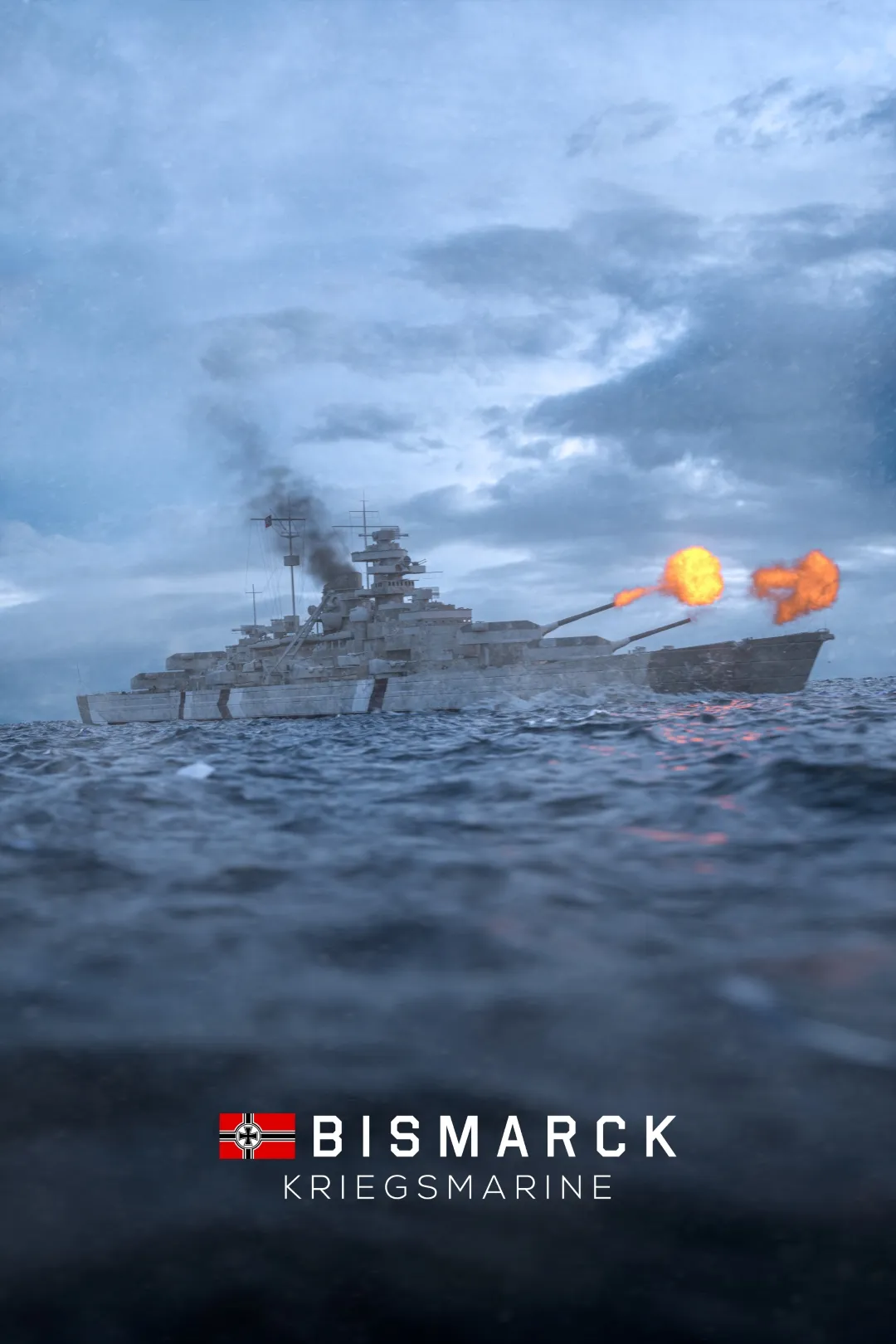
No warship in history casts a longer shadow. Bismarck was the pride of Hitler's Kriegsmarine — over 50,000 tons of armoured menace, eight 380 mm (15-inch) guns in four twin turrets, and a reputation for invincibility that gripped both sides of the Atlantic. She was beautifully built and superbly protected, and when she finally broke out into the open ocean in May 1941 on Operation Rheinübung, accompanied by the heavy cruiser Prinz Eugen, the Royal Navy mobilised everything it had to stop her. They knew what a battleship like this could do loose among the convoys that kept Britain alive. In the Denmark Strait, between Iceland and the Arctic ice, she met HMS Hood — the most famous warship in the British fleet — and the battleship Prince of Wales. The action lasted minutes. A salvo from Bismarck plunged down onto Hood and found her magazines; the great battlecruiser erupted in a tower of flame and broke apart, sinking with all but three of her 1,418 men. It was a stunning, shocking blow, perhaps the worst single moment of the naval war for Britain — and it sealed Bismarck's own fate. From London, Winston Churchill issued the order that echoed through every wardroom in the fleet: "Sink the Bismarck." The hunt that followed was epic and merciless, a chase across hundreds of miles of grey Atlantic. Bismarck, leaking oil from a hit taken in the Denmark Strait, shook off her pursuers and made a bold run for the safety of occupied France. For a time she vanished, and it seemed she might escape. Then a torpedo from an obsolete Swordfish biplane — a fragile, fabric-covered aircraft launched from the carrier Ark Royal into a screaming gale — struck her stern and jammed her rudder. The most powerful warship in the German navy was left steaming helplessly in a circle, unable to steer, awaiting the dawn she knew would bring the British battle fleet. It came. On the morning of 27 May 1941, the battleships King George V and Rodney closed in and pounded Bismarck into a blazing, broken wreck, their heavy shells smashing through her superstructure and silencing her guns one by one. Unable to sink her with gunfire alone, the British closed with torpedoes, and scuttling charges set by her own crew completed the work. She rolled over and went down with over 2,000 men; only a little more than a hundred were saved before the threat of U-boats drove the rescuers away. Her career lasted barely a week, yet she became immortal. In 1989 the explorer Robert Ballard found her wreck nearly 4,700 metres down, sitting upright on the seabed, still recognisably the great ship that had terrorised an ocean. Bismarck endures as the ultimate symbol of raw naval power — and of its limits: the terrible price of pride, the vulnerability of even the mightiest ship, and one of the greatest sea chases ever told. To reconstruct her is to capture a legend at the height of her brief, devastating life.
Reconstruction Pipeline
Frequently Asked About German Battleship Bismarck
Why is the Bismarck so famous?
She was Germany's most powerful battleship, and in May 1941 she sank the British battlecruiser HMS Hood in minutes — triggering a massive Royal Navy hunt that ended in her own destruction days later.
How was the Bismarck sunk?
A torpedo from a Swordfish aircraft off HMS Ark Royal jammed her rudder, leaving her unable to steer. British battleships King George V and Rodney then pounded her, and she sank on 27 May 1941 with over 2,000 men.
Has the Bismarck wreck been found?
Yes. Robert Ballard located the wreck in 1989, roughly 4,700 m deep west of Brest, France. It remains remarkably intact on the seabed.
What guns did the Bismarck carry?
Eight 380 mm (15-inch) guns in four twin turrets, with a heavy secondary and anti-aircraft battery. She displaced over 50,000 tons fully loaded.