The Story of USS Hornet
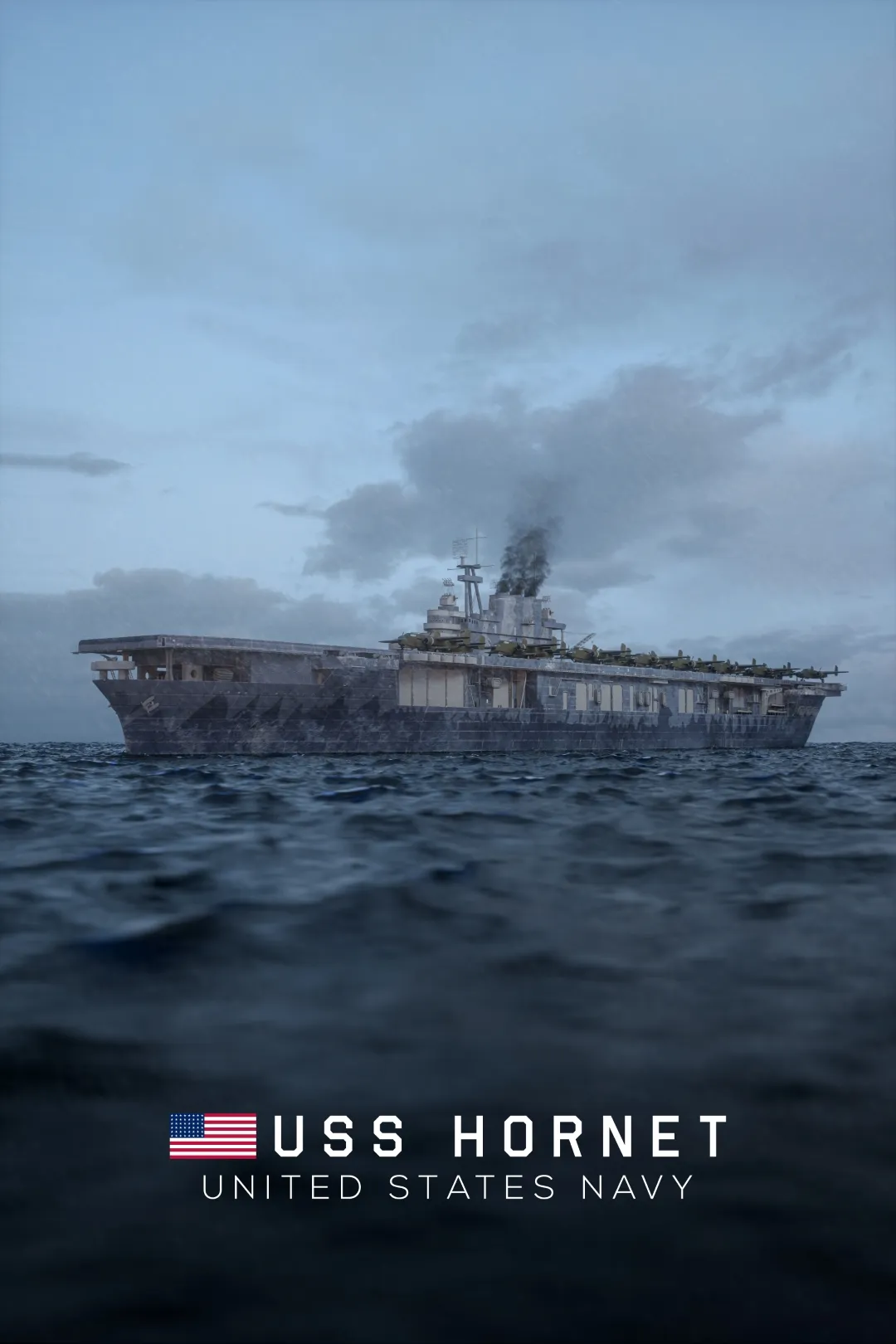
She lived barely a year, but into that short life she crammed a remarkable amount of history — including one of the most audacious missions ever flown from the deck of a ship. USS Hornet (CV-8) was a Yorktown-class aircraft carrier, and from her flight deck came a blow that stunned Japan and lifted American spirits in the darkest, most desperate days of the war. In April 1942, with the United States reeling from a string of defeats since Pearl Harbor, Hornet steamed deep into the western Pacific carrying a strange and dangerous cargo: sixteen United States Army B-25 bombers — large, twin-engined land planes far too big ever to land back aboard a carrier — lashed to her flight deck. This was the Doolittle Raid. In a feat many thought impossible, the heavy bombers thundered off Hornet's pitching deck and flew on to strike Tokyo and other cities of the Japanese home islands themselves — the first American attack on Japan of the war. The material damage was slight, but the psychological shock was enormous on both sides: Japan had been assured it was invulnerable, and Hornet had just proved otherwise, while America had been given its first taste of striking back. Two months later she was at the Battle of Midway, where her air group joined the strikes that sank four Japanese carriers and turned the war — though her torpedo squadron was almost completely wiped out, pressing home their attacks with terrible, doomed courage against overwhelming odds, a sacrifice that helped clear the way for the dive bombers that won the day. Then came the brutal struggle for Guadalcanal. At the Battle of the Santa Cruz Islands in October 1942, Hornet was caught by a furious and well-coordinated Japanese air assault. Bombs and torpedoes ripped into her, and at least one crippled enemy aircraft crashed deliberately onto her deck in an early foreshadowing of the kamikaze. Ablaze, battered and dead in the water, she was eventually abandoned by her crew; attempts to scuttle her failed, and she was finally finished off by Japanese destroyers' torpedoes, sinking into the deep Pacific. Her career had lasted just over a year — but in that brief span she had launched a raid that shook an empire and fought in the most important naval battle of the Pacific. So valued was her name that it was quickly given to a new carrier then under construction, ensuring that the legend of the Hornet sailed on to fight through the rest of the war. To reconstruct USS Hornet (CV-8) is to capture a ship that burned brightly and briefly — the carrier that launched the Doolittle Raid against Tokyo and helped win Midway, all in a single extraordinary year before she was lost at Santa Cruz. Few warships achieved so much in so short a life, or left so large a mark on the war in so little time.
Reconstruction Pipeline
Frequently Asked About USS Hornet
Why is USS Hornet (CV-8) famous?
She launched the Doolittle Raid in April 1942 — the first US air attack on Tokyo — and fought at Midway, all within barely a year of service.
How was the USS Hornet sunk?
At the Battle of the Santa Cruz Islands in October 1942, Japanese bombs, torpedoes and crashing aircraft crippled her; abandoned, she was finished off by Japanese destroyers.
What was the Doolittle Raid?
A daring mission in which Army B-25 bombers flew off Hornet's deck to strike Japan, lifting American morale after Pearl Harbor.