The Story of HMS Ark Royal
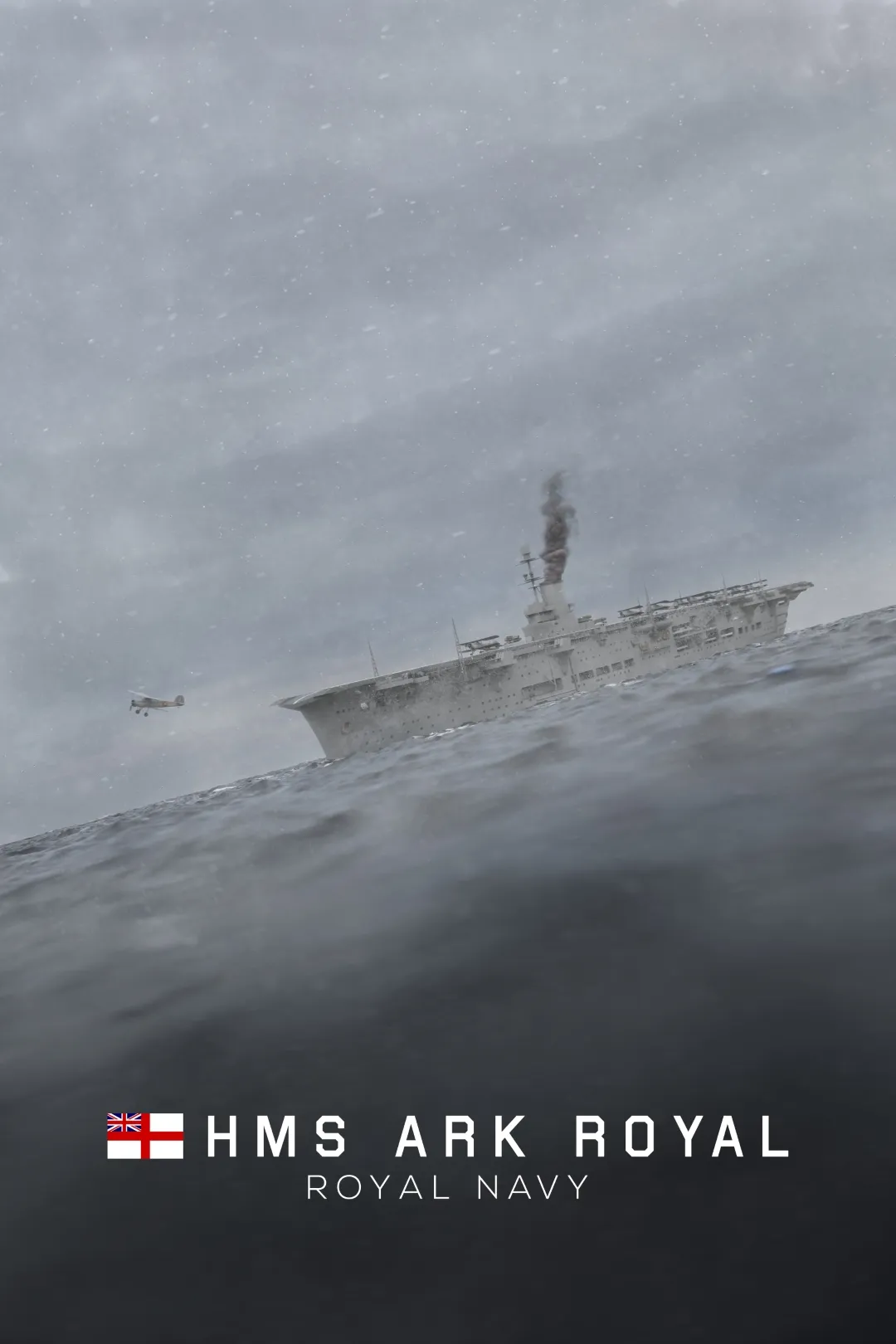
The Germans claimed to have sunk her so many times that their propaganda broadcasts kept taunting Britain with the question, "Where is the Ark Royal?" The answer, again and again, was the same: still afloat, still flying off her aircraft, still in the fight. HMS Ark Royal was Britain's most famous aircraft carrier of the early war years, a large, graceful ship with a distinctive twin-level hangar, and she seemed to lead a charmed life that became a symbol of British defiance in itself. From the war's first days she was everywhere the action was. Her aircraft scouted, bombed and hunted across the North Sea, the Atlantic and the Mediterranean, sharing in the early hunt for the pocket battleship Admiral Graf Spee and operating with Force H out of Gibraltar, the famous squadron that held the western Mediterranean and escorted the vital, desperate convoys to the island fortress of Malta. The Luftwaffe and German radio announced her destruction so often, and so wrongly, that "Where is the Ark Royal?" became a grim joke in Britain and a point of pride. Her greatest hour came in May 1941, during the frantic hunt for the Bismarck. The German battleship had sunk HMS Hood and was slipping away through the Atlantic toward the safety of occupied France, and the pursuing British fleet was running low on fuel and time; if she could not be slowed, she would escape. Ark Royal launched her Swordfish torpedo bombers — fragile, fabric-covered biplanes that looked like relics of an earlier age — into a screaming Atlantic gale, in flying conditions so violent that taking off and landing was itself an act of courage. Against all odds, one of their torpedoes struck Bismarck's stern and jammed her rudder, leaving the most powerful warship in the German navy unable to steer. That single hit doomed her, allowing the British battle fleet to catch and destroy her the next morning. Without Ark Royal's aircraft, Bismarck almost certainly reaches port. But luck, however long it holds, eventually runs out. In November 1941, while returning from yet another Malta operation, Ark Royal was struck by a single torpedo from the German submarine U-81 off Gibraltar. The hit seemed survivable, and she was taken in tow toward port. But flooding spread through the great ship as her damage-control efforts faltered, her power failed, and slowly, agonisingly, over many hours, she rolled onto her side and sank within sight of safety. Remarkably, of her large crew only one man was lost — a testament to the long, controlled nature of her death even as the ship herself could not be saved. The carrier the enemy could never sink in open battle was claimed at last by a lone torpedo and the relentless inflow of the sea. Her wreck was located on the Mediterranean floor decades later, lying upright far below. Her name was so cherished that the Royal Navy carried it forward through generations of later carriers. To reconstruct Ark Royal is to capture the ship that helped kill the Bismarck and outlived a hundred false reports of her own death — the famous flattop that simply would not stay sunk, until at last she did.
Reconstruction Pipeline
Frequently Asked About HMS Ark Royal
Why was HMS Ark Royal famous?
A celebrated British aircraft carrier whose Swordfish aircraft crippled the Bismarck's steering in 1941, sealing the German battleship's fate. German propaganda repeatedly and falsely claimed her sunk.
How was HMS Ark Royal sunk?
Torpedoed by the German submarine U-81 near Gibraltar in November 1941. Flooding spread during the tow and she slowly capsized — remarkably, only one of her crew died.
What was Ark Royal's role in the Bismarck hunt?
Her aircraft launched the torpedo attack that jammed Bismarck's rudder, leaving the battleship unable to steer and allowing the British fleet to catch and sink her.