The Story of HMS Belfast
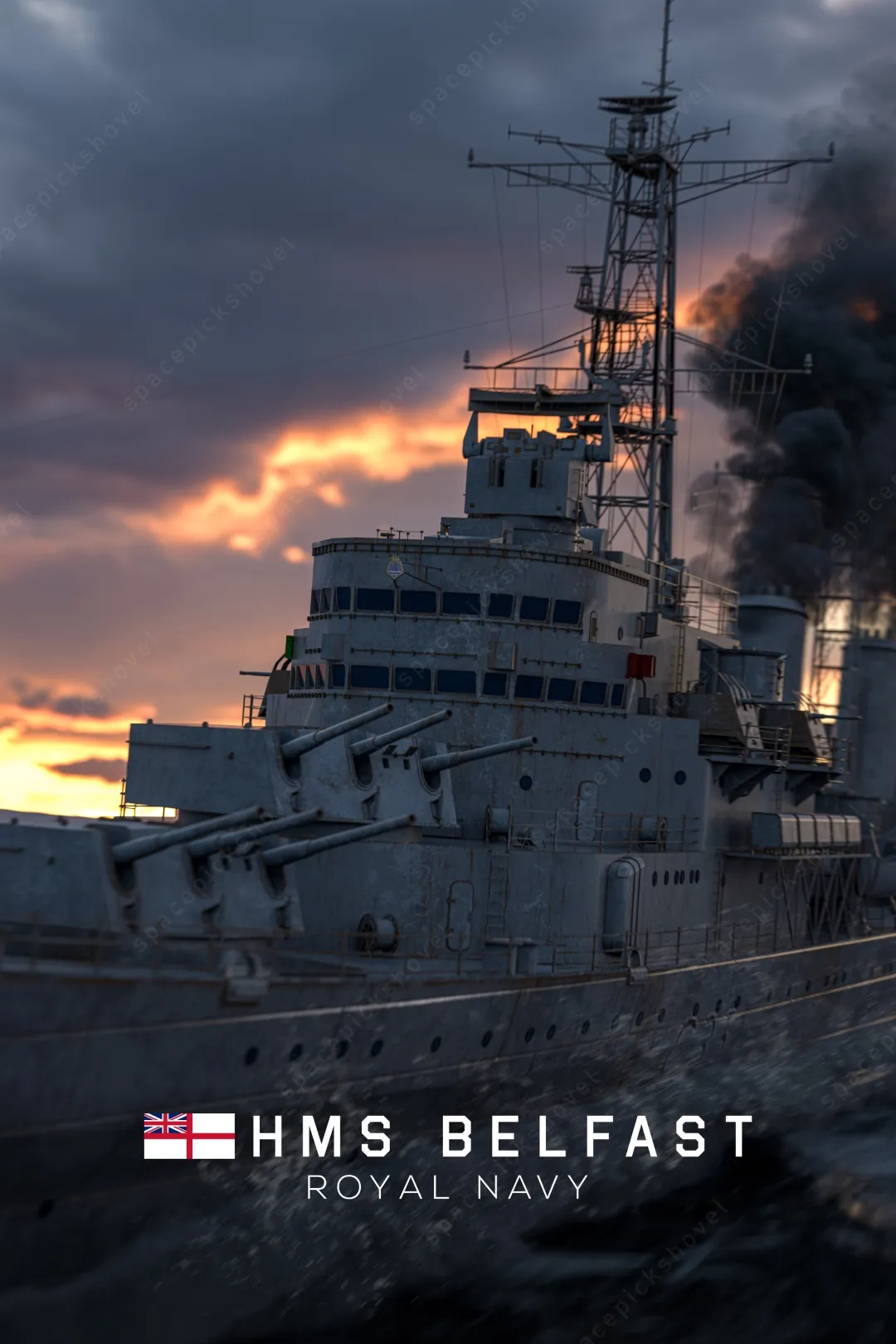
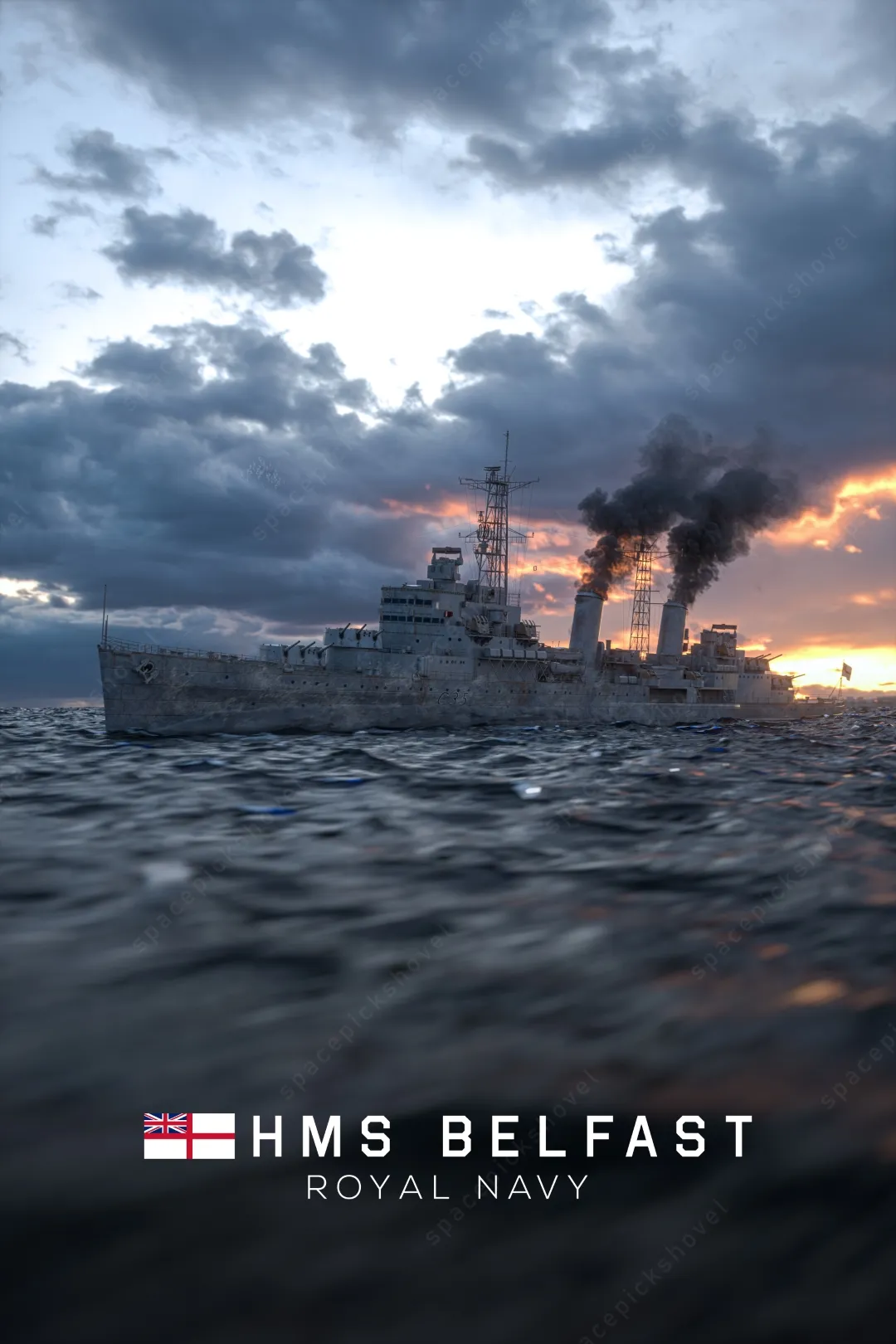
She survived being very nearly broken in two, and went on to outlive almost every ship of her generation — and you can still walk her decks today. HMS Belfast is a Town-class light cruiser, and her long, eventful life reads like a history of the Royal Navy itself across the middle of the twentieth century, from the opening months of the Second World War to the Korean War and beyond. Her career nearly ended before it had truly begun. In November 1939, only weeks into the war, a German magnetic mine detonated beneath her in the Firth of Forth. The explosion broke her back, buckling her hull and wrecking her machinery, and very nearly finished her then and there. The damage was so severe that her repair and near-total reconstruction took almost three years — but when she finally returned to the fleet, she was rebuilt wider, stronger and better armed than before, a more formidable ship than the one the mine had crippled. Her finest hour came in the Arctic, amid the freezing darkness of December 1943. Belfast was a key player in the Battle of the North Cape, the action that hunted down the German battleship Scharnhorst as she tried to attack a convoy bound for the Soviet Union. Belfast's radar found and shadowed the German raider through the polar night, her reports vectoring the battleship HMS Duke of York into position for the kill, and her guns joined the engagement that drove Scharnhorst to her doom in the icy sea. Then came D-Day. On the morning of 6 June 1944, Belfast was among the first ships to open the naval bombardment of the Normandy beaches, hurling her 6-inch shells inland in support of the troops storming ashore in the greatest invasion in history, and she remained off the beaches for weeks supporting the advance. Her fighting life did not end with the world war. In the early 1950s she sailed to the Far East and served through the Korean War, her guns once again bombarding enemy positions far from home. By the time she was finally retired, she had become a living relic of a vanished age — one of the last big-gun cruisers of a navy that had moved on into the era of the guided missile. Rather than send her to the breakers, a campaign saved her, and in 1971 HMS Belfast was opened to the public, permanently moored on the River Thames in the very heart of London. There she remains today, operated as a branch of the Imperial War Museum and visited by millions, the only surviving big-gun warship of the Royal Navy that fought in the Second World War — a complete, walk-aboard time capsule of life at sea in that conflict. To reconstruct HMS Belfast is to honour a true survivor: a cruiser nearly killed in her first weeks, rebuilt into a veteran of the Arctic and Normandy and Korea, and preserved at last as a bridge between that fading world and our own. Few warships fought so widely, lived so long, or remained so completely with us.
Reconstruction Pipeline
Frequently Asked About HMS Belfast
Where is HMS Belfast now?
Preserved as a museum ship on the River Thames in London since 1971, operated by the Imperial War Museum and open to visitors.
What battles did HMS Belfast fight?
She helped sink the German battleship Scharnhorst at the Battle of the North Cape (1943) and bombarded the Normandy beaches on D-Day (1944); she later served in the Korean War.
What type of ship is HMS Belfast?
A Town-class light cruiser armed with twelve 6-inch guns. She survived a near-fatal mine explosion early in the war and was rebuilt stronger than before.