The Story of IJN Hiryu
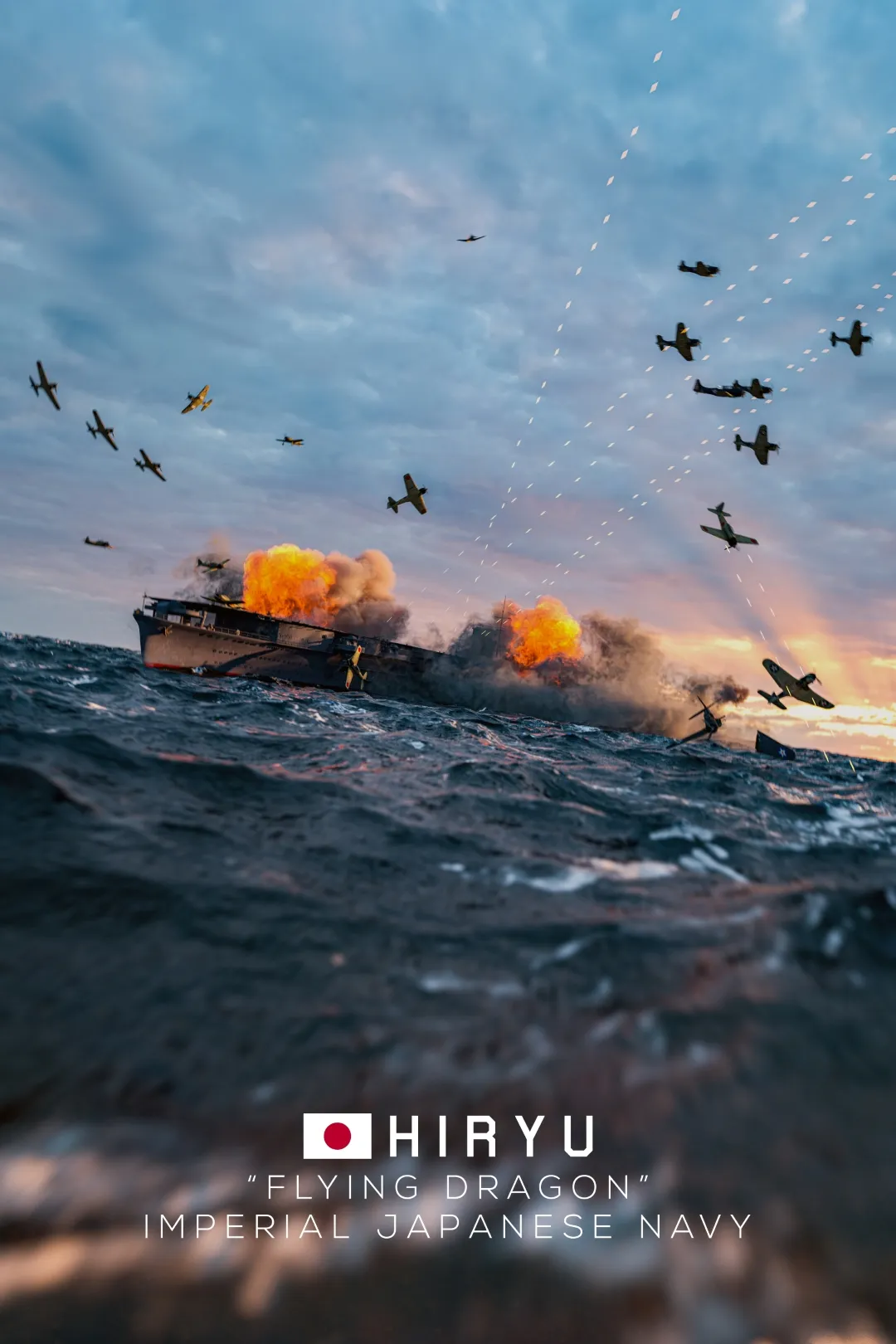
She was the carrier that refused to quit — the last of the Japanese flattops still fighting on the worst day in the history of the Imperial Navy. IJN Hiryu, whose name means "Flying Dragon," was a fast, sleek fleet carrier, and she sailed with the elite Kido Butai through the long string of victories that followed Pearl Harbor, from the strike on Hawaii to the raids across the Pacific and deep into the Indian Ocean. She was a veteran of triumph when she came to Midway in June 1942. At the Battle of Midway, disaster fell on the Japanese fleet with terrible speed. On the morning of 4 June, in a matter of minutes, American dive bombers turned three of the four Japanese carriers — Akagi, Kaga and Soryu — into blazing, doomed wrecks. But Hiryu, steaming somewhat apart from the others, escaped that first devastating strike. And while her sisters burned on the horizon, she did not hesitate: she struck back, alone, at the entire American carrier force. Hiryu launched her aircraft in a furious counterattack. Her dive bombers and torpedo planes found the American carrier USS Yorktown and hammered her with bombs and torpedoes, leaving her crippled, listing and eventually doomed — a blow that, with a later submarine attack, would send Yorktown to the bottom. For a few hours that afternoon, a single Japanese carrier took on the United States Navy's carriers and made them pay, a display of aggression and skill that won the grudging respect of her enemies even in the midst of Japan's catastrophe. But such defiance could not last against the odds she faced. Later that same afternoon, American dive bombers from Enterprise found Hiryu at last. Four bombs smashed into her flight deck near the bridge, igniting the same kind of catastrophic fires that had already consumed her sisters. The Flying Dragon burned through the night, her engines stopped, her decks peeled back by the inferno raging inside her. By dawn she was abandoned and scuttled — and her admiral, Tamon Yamaguchi, one of Japan's finest carrier commanders, chose to remain aboard and go down with his ship, as did her captain. Hiryu's lone counterstrike was the dying roar of a great fighting force. She had inflicted the heaviest single blow the Japanese landed at Midway, mortally wounding Yorktown, and then she followed her three sisters into the deep — the last of the four to fall, and the only one to take a measure of vengeance first. Her wreck was located in 2019 on the Pacific floor near Midway. To reconstruct IJN Hiryu is to capture that spirit of stubborn, lethal defiance — the one carrier that kept fighting while the others burned, the Flying Dragon that struck back hard before she too went down. Of all the ships lost at Midway, hers is perhaps the most admired even by those who sank her: the dragon that died with its teeth bared.
Reconstruction Pipeline
Frequently Asked About IJN Hiryu
What did the Hiryu do at Midway?
The lone Japanese carrier to escape the first US strike, she launched the counterattacks that crippled USS Yorktown before she too was bombed and sunk.
How was the Hiryu sunk?
US dive bombers from Enterprise hit her flight deck on 4 June 1942, igniting fatal fires; she was scuttled the next morning, her admiral and captain choosing to go down with her.
What does "Hiryu" mean?
"Flying Dragon" — a fast fleet carrier of the Imperial Japanese Navy.