The Story of USS Enterprise
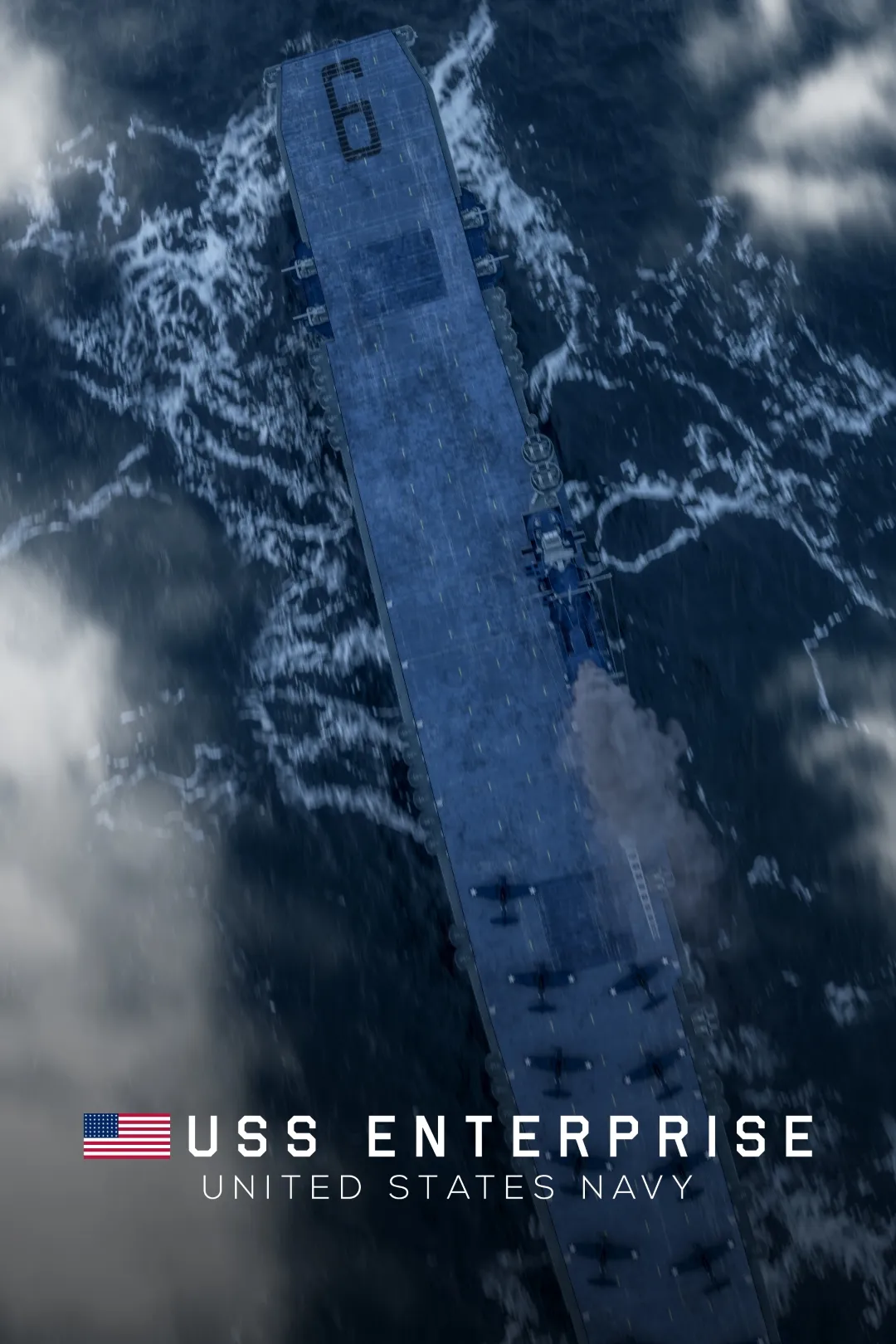
She was the most decorated American warship of the Second World War, the carrier that always seemed to be wherever the fighting was thickest — and the ship that, more than any other single vessel, helped win the war in the Pacific. USS Enterprise (CV-6), known throughout the fleet and across the nation as "The Big E," earned twenty battle stars and a reputation for being unsinkable, no matter how hard or how often the enemy tried to destroy her. By a stroke of fortune, Enterprise was at sea delivering aircraft to Wake Island when Pearl Harbor was attacked on 7 December 1941, narrowly escaping the destruction that crippled the battle fleet at its moorings. From that day forward she carried the war straight back to the enemy. Her aircraft struck in the early carrier raids that kept Japan off balance, and at the decisive Battle of Midway in June 1942 her dive bombers helped sink four Japanese carriers in a single day — the battle that turned the entire course of the Pacific War. Then she plunged into the long, savage struggle for Guadalcanal, where the survival of the American foothold often seemed to hang by a thread. Time and again Enterprise was battered nearly to death. At the Battle of the Eastern Solomons and again at Santa Cruz, Japanese bombs tore through her decks, set her ablaze and killed scores of her crew — yet each time her damage-control teams saved her and she returned to the fight. At one desperate point in late 1942, after Hornet was sunk and other carriers were damaged, Enterprise was for a time the only operational American aircraft carrier in the entire Pacific Ocean. She fought on regardless, and a hand-painted sign on her island defiantly proclaimed: "Enterprise vs. Japan." She survived it all. She fought through the great battles of 1943, 1944 and 1945, pioneered the difficult art of night carrier operations, and ranged across the Pacific as the tide rolled toward Japan. Even in the war's final months she kept fighting, until a kamikaze struck her off Okinawa in 1945 and blew her forward elevator high into the air — and still she did not sink. She ended the war as a legend, having taken part in nearly every major naval campaign of the Pacific. And then, sadly, the ship that had survived everything the enemy could throw at her could not survive peace. Despite determined efforts to preserve "The Big E" as a memorial, the campaign failed for want of funds, and in the 1950s the most decorated warship in American history was sold for scrap — a quiet, unworthy end for so storied a ship. But her name and her glory live on in the carriers that followed her. To reconstruct USS Enterprise (CV-6) is to capture the heart of the United States Navy's Pacific war — the indomitable carrier that fought from Pearl Harbor to Okinawa, was reported sunk again and again, and refused every time to die. She is, quite simply, the greatest fighting ship America had in its greatest naval struggle.
Reconstruction Pipeline
Frequently Asked About USS Enterprise
Why is USS Enterprise (CV-6) famous?
She was the most decorated US warship of WWII, earning 20 battle stars. "The Big E" fought in nearly every major Pacific campaign and was repeatedly reported sunk by the enemy.
What battles did the Enterprise fight?
Midway, the Eastern Solomons, Santa Cruz, Guadalcanal and beyond — at one point in late 1942 she was the only operational US carrier in the Pacific.
What happened to USS Enterprise (CV-6)?
She survived the war, including a kamikaze hit off Okinawa, but efforts to preserve her as a memorial failed and she was scrapped in the 1950s.