The Story of IJN Zuikaku
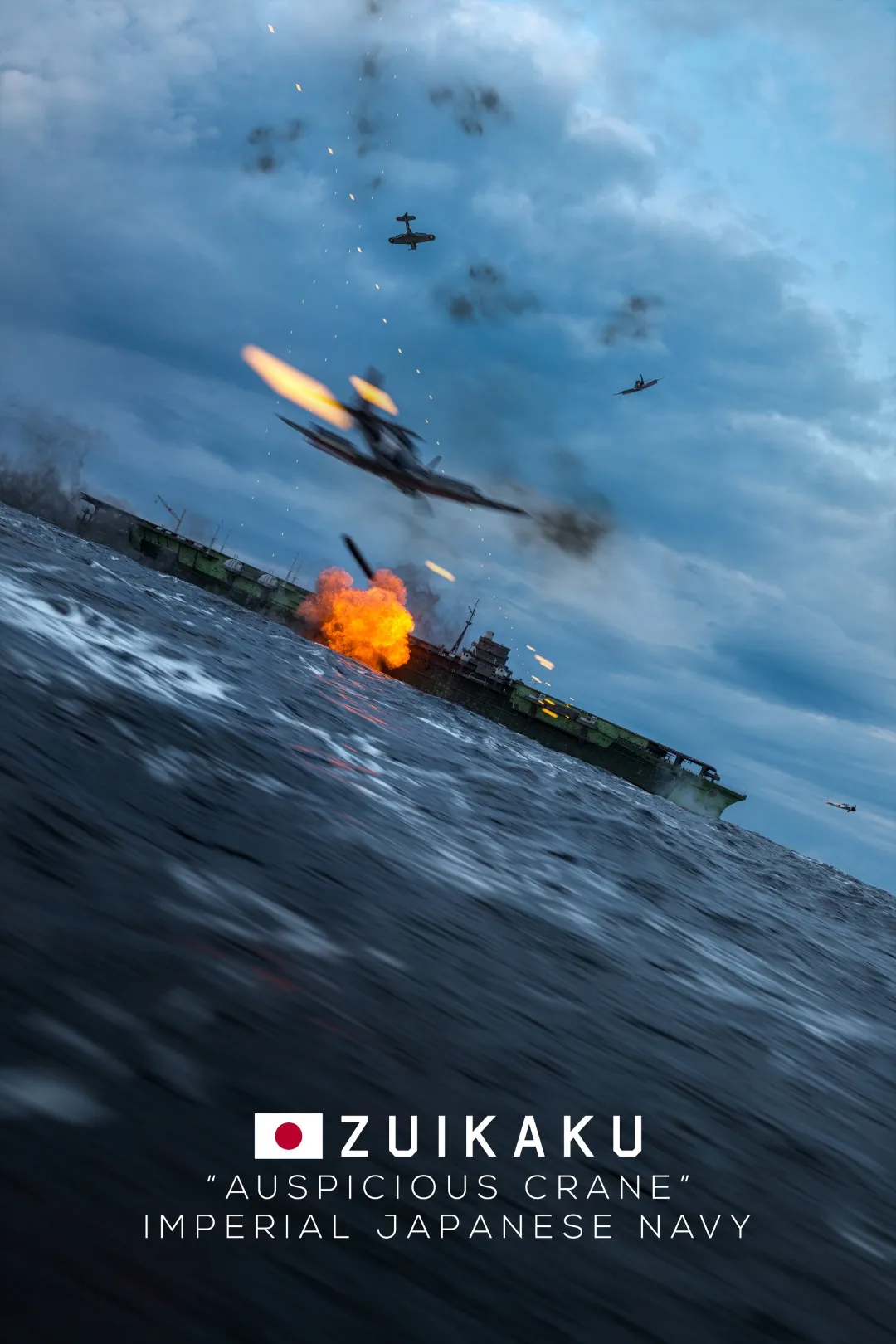
She was there at the beginning, and she was there at the end — the last survivor of the six great carriers that attacked Pearl Harbor, and the ship whose sinking marked the final death of Japanese carrier air power. IJN Zuikaku, the "Auspicious Crane," was the sister of Shokaku, and together the two newest and finest carriers in the fleet formed Carrier Division 5 and helped launch the war. Zuikaku's planes struck Pearl Harbor in December 1941, and from there she fought through nearly every major carrier action of the Pacific. At the Battle of the Coral Sea in May 1942 she helped fight the Americans to a costly draw and emerged unscathed herself — but her air group was so battered, and her sister Shokaku so damaged, that Carrier Division 5 missed the decisive Battle of Midway the following month. It was a fateful absence: while four of her fleet-mates burned and sank at Midway, Zuikaku was far away, and so survived to fight on when so many did not. She fought through the meat-grinder of the South Pacific — the Eastern Solomons, Santa Cruz, the long bloody struggle for Guadalcanal — surviving battle after battle as the carriers around her were sunk and the irreplaceable veteran aircrews she relied upon were steadily killed off. By 1944 she was an old hand in a fleet that had been bled white, her decks increasingly manned by half-trained replacements. At the Battle of the Philippine Sea in June 1944 she watched the once-mighty Japanese carrier air arm shattered in a single day of slaughter, even as the ship herself again escaped destruction. Her final act came at Leyte Gulf in October 1944. By then Zuikaku had almost no aircraft and almost no trained pilots left to fly them, and she was sent north on a desperate, deliberate sacrifice — the centrepiece of a decoy force whose entire purpose was to lure the powerful American carrier fleet away from the invasion beaches. The ruse worked: the Americans took the bait and steamed north after her. But the price was Zuikaku herself. Overwhelmed by wave after wave of American carrier aircraft on 25 October, she was hit by bombs and torpedoes until she rolled over and sank — and as she went, her surviving crew gathered on the listing flight deck to salute the lowering of her battle flag, a final moment of discipline and pride as the last Pearl Harbor carrier went down. With Zuikaku gone, the carrier force that had begun the war at Pearl Harbor was utterly extinguished. The Auspicious Crane had outlived all five of her companions from that first morning, fighting on through three years of attrition until there was nothing left to fight with. To reconstruct IJN Zuikaku is to capture that whole arc — the last survivor of Pearl Harbor, present at the beginning and the end, sacrificed as a decoy when her aircraft were gone, saluted by her crew as she sank. She is the closing chapter of the story her sisters began, and the symbol of an entire carrier navy's rise and fall.
Reconstruction Pipeline
Frequently Asked About IJN Zuikaku
Why is the Zuikaku notable?
She was the last surviving carrier of the six that attacked Pearl Harbor; her sinking marked the effective end of Japan's carrier air power.
How was the Zuikaku sunk?
At the Battle of Leyte Gulf on 25 October 1944, serving as a decoy, she was overwhelmed by US carrier aircraft and sank as her crew saluted the lowering of her flag.
What does "Zuikaku" mean?
"Auspicious Crane" — she was the sister ship of Shokaku.