The Story of IJN Nagato
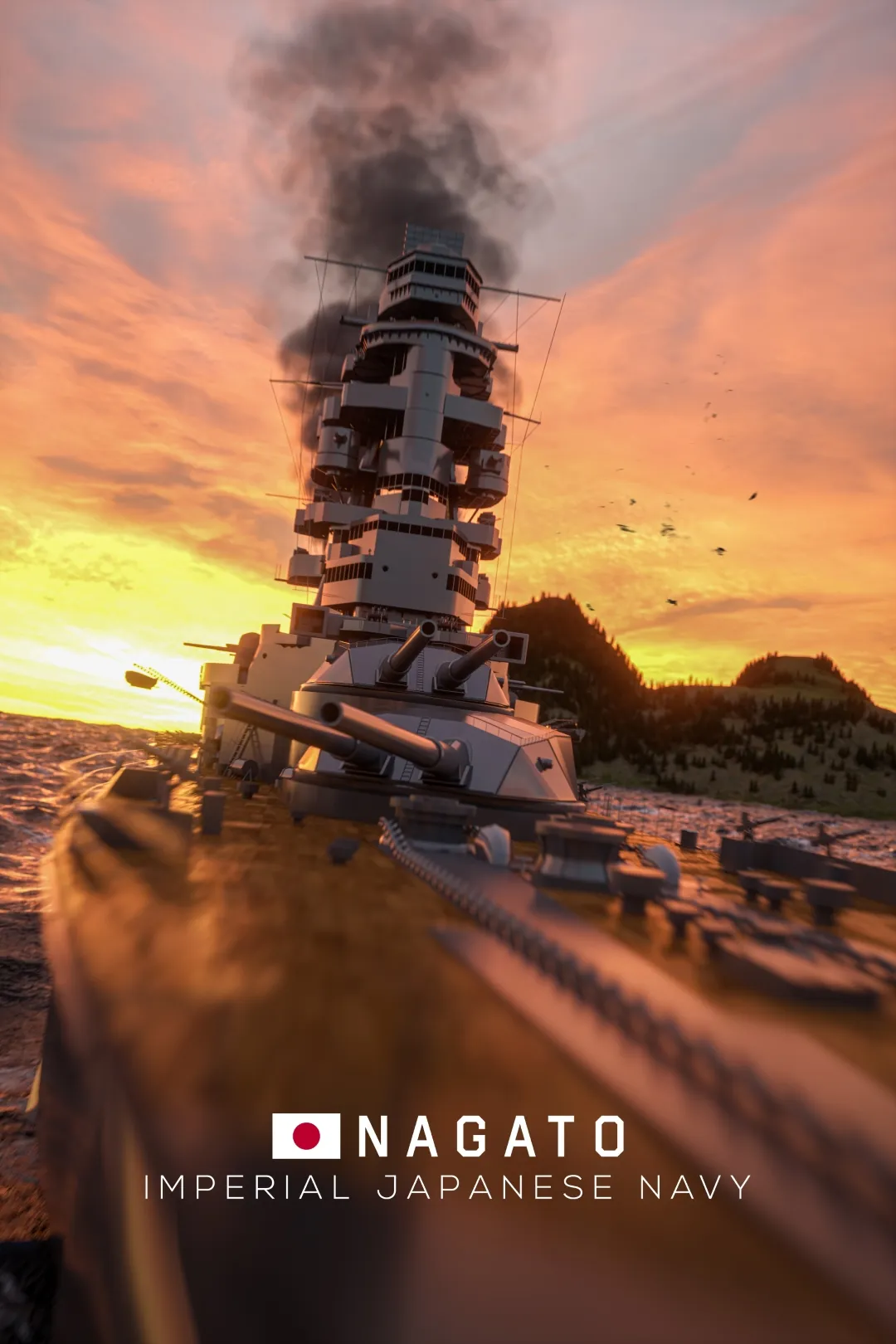
She was the pride of the Imperial Japanese Navy, the flagship from which the order to attack Pearl Harbor was issued — and, after surviving the entire war, she met her end beneath the fire of an atomic bomb. IJN Nagato was a battleship of immense prestige: the first warship in the world to carry 16-inch guns, a symbol of Japanese naval might so famous that schoolchildren learned her silhouette by heart and modellers prized her above almost any other ship in the fleet. It was aboard Nagato, as fleet flagship, that Admiral Isoroku Yamamoto's headquarters issued the coded signal that set the Pearl Harbor attack in motion in December 1941. Yet for much of the war that followed, the great battleship was held back — a precious, prestigious asset kept in reserve while the aircraft carriers and lighter ships did the hard fighting and the dying. The age of the battleship was passing even as Nagato embodied its grandeur, and Japan was reluctant to risk her. Her chance to fight in earnest finally came late, at the Battle of Leyte Gulf in October 1944 — the largest naval battle in history and the death ride of the Imperial Japanese Navy. Nagato sailed with Admiral Kurita's Center Force, fought her way through air attacks and the desperate clash off Samar, and fired her huge guns in anger as Japan's last great fleet was broken on the rocks of American sea and air power. She took damage but survived, limping home from the catastrophe that destroyed so many of her consorts. By the war's end, Nagato was one of the only major Japanese warships still afloat — battered, rusting, nearly immobilised by fuel shortages and air raids, but alive, a survivor among the wreckage of a shattered navy. The victorious Americans seized her as a war prize, and her last voyage carried her across the Pacific to Bikini Atoll. There, in the summer of 1946, she was anchored among the target ships for Operation Crossroads, the United States' atomic bomb tests, a relic of one age offered up to the terrible new weapon that had ended it. The first blast, an air burst, left her damaged but defiantly afloat. The second, an underwater detonation of immense violence, doomed her. For several days the old flagship lingered, listing quietly in the radioactive lagoon, as if reluctant to go — and then, in the night, she rolled over and sank to the bottom. Today her overturned hull rests in the depths of Bikini Lagoon, a haunting destination for divers, the proud flagship of one era destroyed by the weapon that defined the next. To reconstruct IJN Nagato is to capture a vanished kind of grandeur — the battleship from which the Pearl Harbor order went out, the first in the world to mount 16-inch guns, the prestige flagship of a navy that no longer exists. She survived the war that swept away her sisters, only to fall at last to the atom, bookending the age of the battleship from its zenith to its end.
Reconstruction Pipeline
Frequently Asked About IJN Nagato
Why is the IJN Nagato significant?
She was the fleet flagship from which the Pearl Harbor attack order was issued, and the first battleship in the world to mount 16-inch guns — a symbol of Japanese naval might.
What happened to the Nagato?
One of the few major Japanese warships to survive the war. Taken by the US, she was expended in the 1946 Bikini atomic tests and capsized days after the underwater blast.
Can you see the Nagato wreck?
Yes — her overturned hull lies in Bikini Lagoon and is a noted (if remote) scuba-diving site.