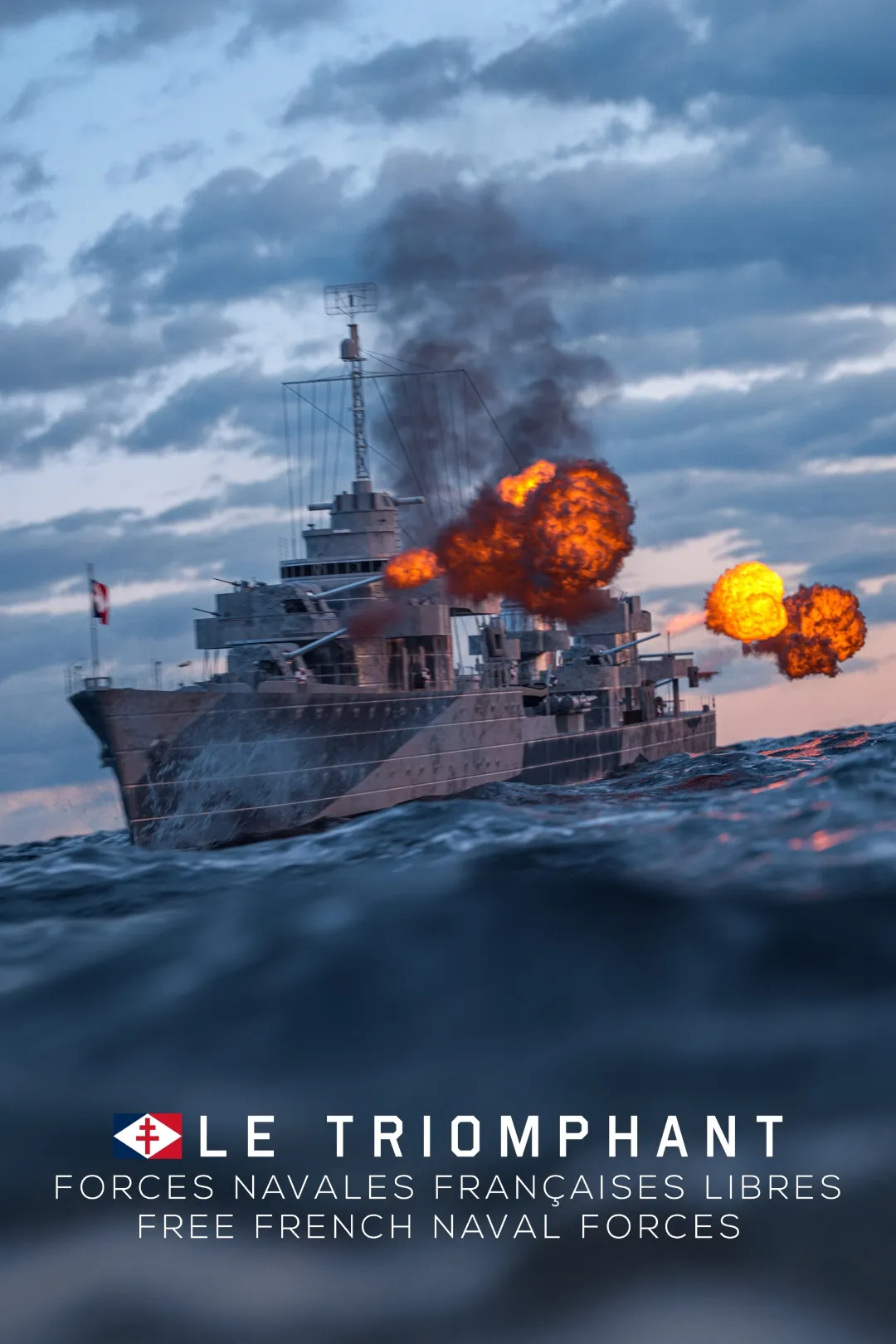
French Destroyer Le Triomphant Poster
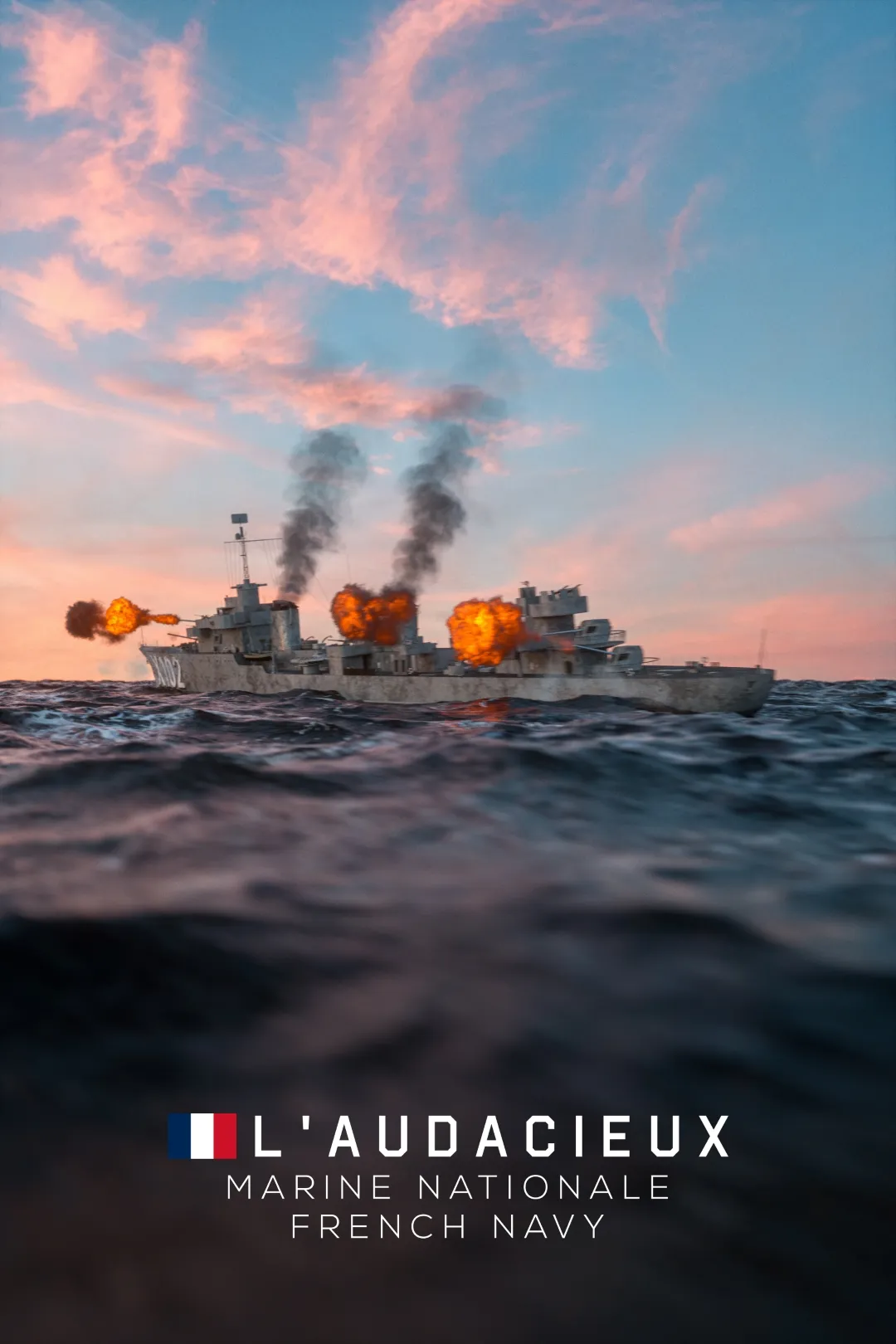
If her sister L'Audacieux met a tragic end on the wrong side of the war, Le Triomphant lived up to her triumphant name on the right one. She was another of the legendary Le Fantasque-class super-destroyers — impossibly fast, hard-hitting, and beautiful in a dangerous way, with a hull built for speeds that few warships in history have ever matched. On trials, ships of her class exceeded 45 knots; in service she remained one of the swiftest vessels afloat, a fact that would make her invaluable in the years to come. But Le Triomphant's greatness lay not only in her engines. It lay in a choice. When war was declared in 1939, she joined the Force de Raid, sweeping the Atlantic for German raiders alongside her sisters. She played a minor part in the Norwegian campaign in the spring of 1940 and was under repair when the Germans broke into France that May. As her country collapsed around her, Le Triomphant slipped across to Britain to avoid capture — and there, in the summer of 1940, her crew faced the decision that would define her. While so much of the French fleet obeyed Vichy, scuttled itself, or was seized, the men of Le Triomphant rallied to the Free French cause under Charles de Gaulle. They chose to keep fighting. It was a hard road. She became one of the very few major French warships to fight the Axis without pause, from the war's darkest hour to its end. After a refit she began escorting convoys, then was sent across the world to the Pacific in 1941, where Allied navies, stretched desperately thin, needed every fast, capable hull they could find. There she ferried troops and reinforcements, escorted convoys, defended bases across the vast emptiness of the South Pacific, and showed the flag of a France that had not surrendered. Her speed made her useful; her loyalty made her a symbol. While other French ships sat interned, or fired on their former friends, Le Triomphant carried the tricolour into battle against the common enemy on the far side of the planet. She survived the war — a rare thing for a Le Fantasque — and returned to a liberated France that owed her a genuine debt of honour. In the years that followed she served in the difficult campaigns in Indochina before her long, eventful career finally closed. She had crossed the globe, fought in theatres her designers never imagined, and outlasted the empire she had defied. Le Triomphant stands as proof that a warship is more than steel and steam and clever engineering — that in the end it is the will of the men aboard her that decides what she becomes. Her sisters' fates were written by where they happened to be when France fell; Le Triomphant's was written by what her crew chose to do about it. They chose to keep fighting, under a free flag, for years, far from home. That choice made her name a promise kept — and makes her, in reconstruction, not just one of the fastest destroyers ever built, but one of the most honourable.