The Story of German Submarine Type VIIC U-96 U-Boat
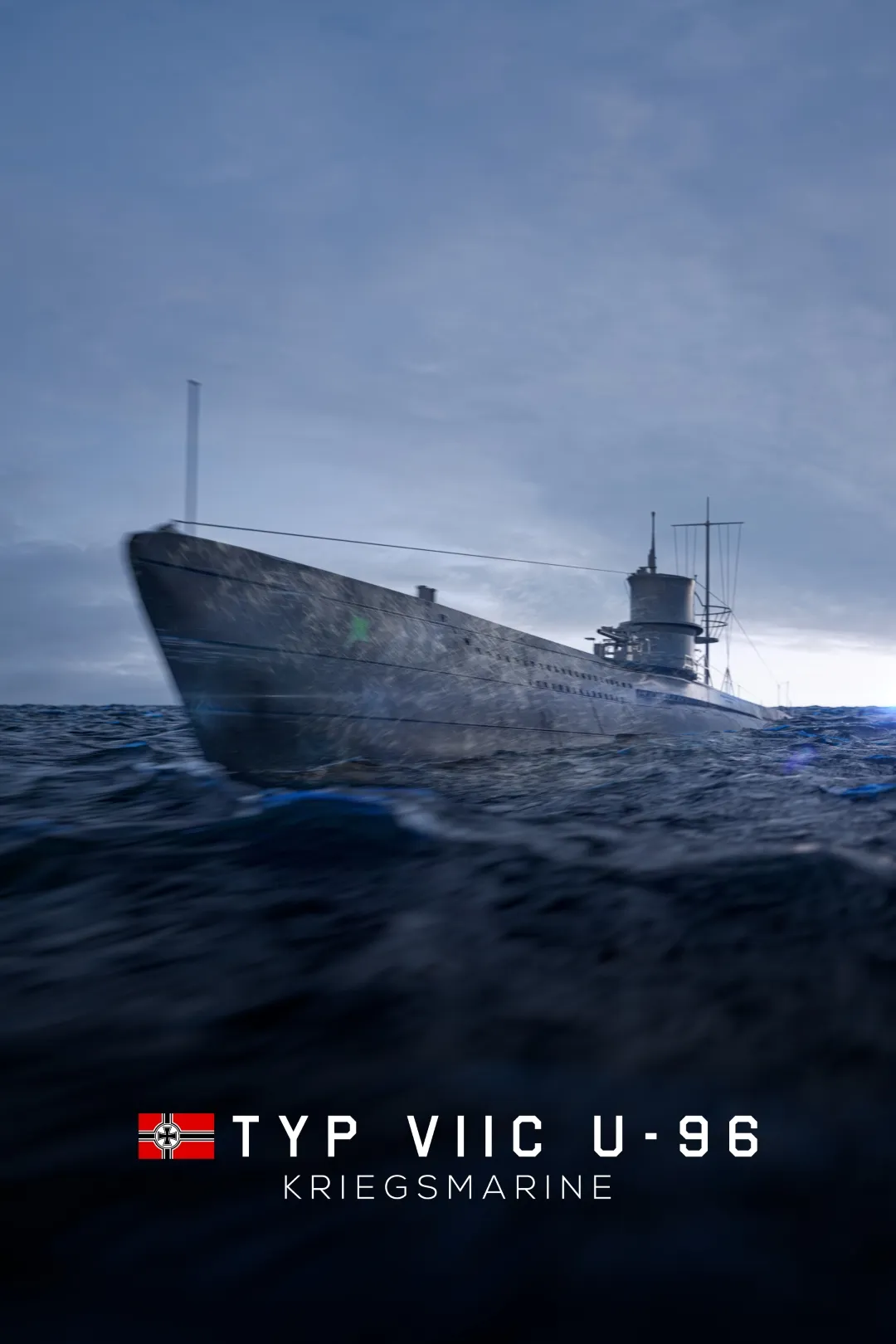
Of all the U-boats that prowled the Atlantic, none is more famous than U-96 — and not only for what she did, but for the story she became. She was a Type VIIC, the workhorse of the German submarine arm, the most-produced submarine in history and the backbone of the wolfpacks that came within reach of strangling Britain's lifeline. A cramped steel tube packed with torpedoes, diesel oil and young men, she hunted through storm and darkness in the longest and one of the deadliest campaigns of the entire war. Under the command of Heinrich Lehmann-Willenbrock, one of Germany's most successful and respected U-boat aces, U-96 sank a string of Allied merchant ships across the brutal convoy battles of 1940 and 1941, when the U-boats still held the upper hand and the Atlantic seemed theirs to command. Life aboard was a waking nightmare of stinking, sodden air, freezing watches on a heaving conning tower, terrifying depth-charge attacks that hammered the hull like a giant's fists, and the constant, grinding knowledge that the sea itself was trying to kill you. The hunters were also the hunted: as the war turned, the Atlantic swallowed U-boat after U-boat, until the silent service became the most lethal branch of the German military to serve in, with the great majority of its crews never coming home. What lifted U-96 from a successful boat to an immortal one was a passenger. The war correspondent Lothar-Günther Buchheim sailed on one of her patrols and survived to write a novel drawn from the experience — Das Boot. Decades later it became one of the greatest war films ever made, and through it the claustrophobic terror, the boredom, the camaraderie and the grim courage of the U-boat war reached the entire world. The roaring diesels, the hull groaning as it plunged too deep, the cheers at a hit and the dread of the depth charges that followed — that was U-96's war, told for all time, and through her the world came to understand what it was truly like beneath the waves. The boat herself did not survive to see the peace. As Allied air power and code-breaking turned the Battle of the Atlantic into a slaughter of the U-boats, U-96 was withdrawn from frontline operations and relegated to a training role. She met her end in 1945, destroyed in an Allied air raid on Wilhelmshaven while in harbour — sunk not in the deep Atlantic she had haunted, but at her berth, by bombs from the sky. Yet her legend reaches far beyond her steel. U-96 has become the face of the entire silent, savage struggle for the Atlantic — the boat that showed the world both the menace and the suffering of the men who fought it from inside a sealed iron hull. To reconstruct her is to capture that whole story in a single vessel: the predator and the trap, the daring and the dread, and the human beings who lived and too often died in the cold dark beneath the convoys.
Reconstruction Pipeline
Frequently Asked About German Submarine Type VIIC U-96 U-Boat
Why is U-96 famous?
A war correspondent's patrol aboard her inspired the novel and film Das Boot, the most famous depiction of the U-boat war. Under ace Heinrich Lehmann-Willenbrock she sank numerous Allied ships.
What is a Type VIIC U-boat?
The most-produced German submarine of WWII and the backbone of the Atlantic wolfpacks — a compact diesel-electric attack submarine carrying torpedoes and a deck gun.
What happened to U-96?
Withdrawn to training duties later in the war, she was destroyed by Allied aircraft at Wilhelmshaven in 1945.