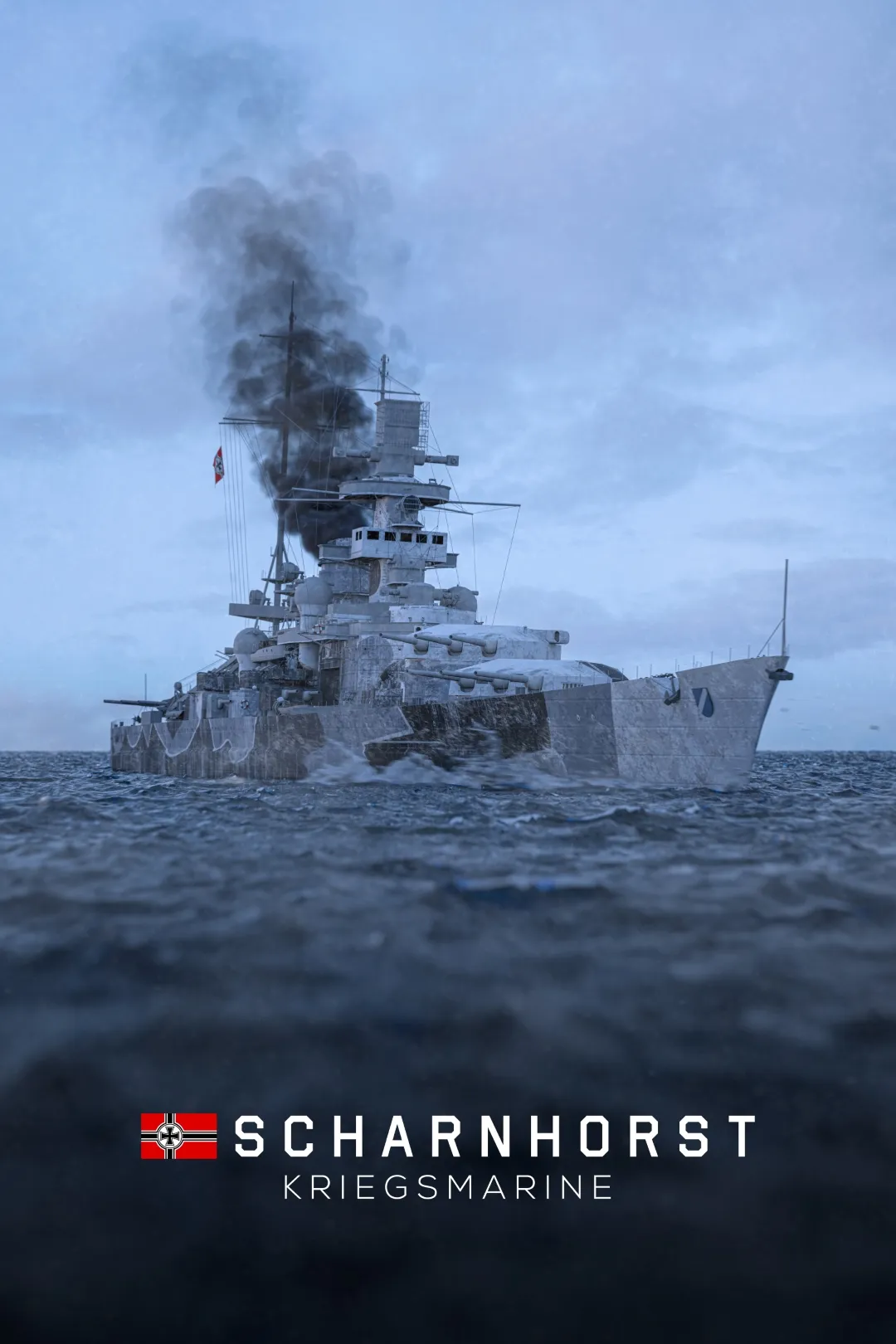
German Battleship Scharnhorst Poster
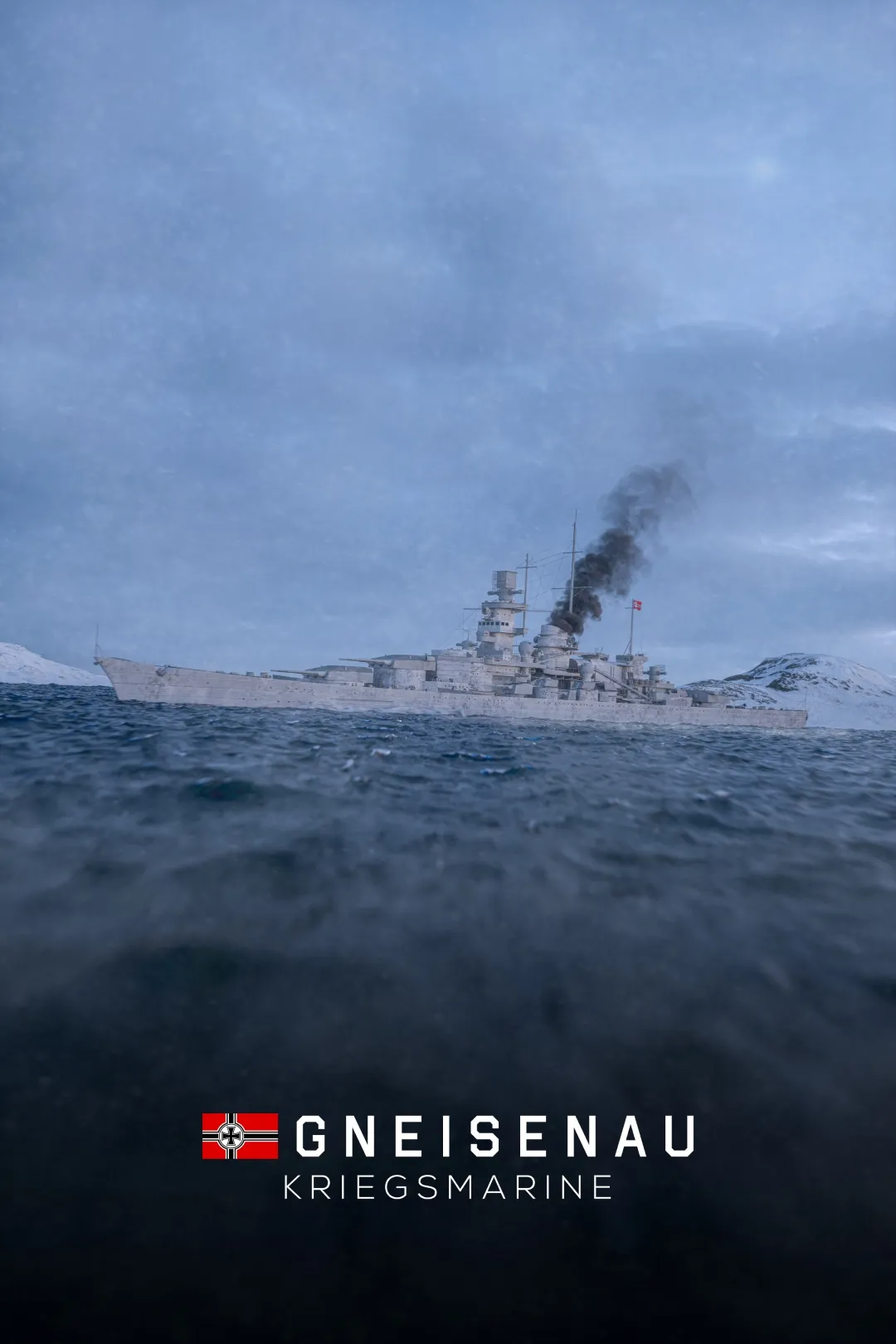
Scharnhorst was a fighter to the last. Fast, well-armoured and aggressive, she and her sister Gneisenau gave the Royal Navy nightmares in the opening years of the war, ranging across the North Sea and out into the Atlantic to strike at shipping and outrun anything strong enough to hurt her. Armed with nine 283 mm guns and capable of well over 30 knots, she was built for hit-and-run warfare — and she practised it with skill and nerve. It was Scharnhorst, alongside Gneisenau, that ran down and sank the British carrier HMS Glorious off Norway in June 1940, in one of the war's most one-sided surface actions — though a single torpedo from one of Glorious's doomed escorting destroyers, Acasta, struck home and proved that even this swift raider could be made to bleed. She raided the convoy routes in the great Atlantic sortie of early 1941, and in February 1942 she stunned the world with the Channel Dash, sprinting up the English Channel in daylight past the very heart of British naval power. For three years she was a phantom, always somewhere the enemy did not want her, always slipping away before the trap could close. Her final act came in the frozen darkness of the Arctic. By late 1943 she lay in Norwegian waters, the last major German surface threat to the convoys carrying war supplies to the Soviet Union. On the day after Christmas, 26 December 1943, she sortied to attack one such convoy, unaware that the British had read her intentions and laid a trap. In the perpetual night of the polar winter, with snow squalls sweeping the black sea, the Battle of the North Cape unfolded. British cruisers shadowed her by radar and drove her off the convoy; then the battleship HMS Duke of York, guided by radar Scharnhorst could not match, found her in the darkness and opened fire from out of the blackness. It was a brutal, lopsided fight. Scharnhorst fought hard and tried to run for home on her superior speed, but radar-directed shells smashed into her again and again, knocking out a boiler room and slowing her fatally. Destroyers and cruisers swarmed in with torpedoes as the great ship was steadily battered and slowed, her guns falling silent one by one until she was a burning, listing wreck in the icy seas. At last she rolled over and went down, taking nearly 2,000 men with her into the freezing Arctic water. Only 36 were pulled out alive. It was the last battle ever fought between battleships in European waters, and a fitting end for a ship that never stopped fighting — caught at last, in the dark, by the one technology she could not outrun. Her wreck was found in 2000, lying upside down off the North Cape, far below the waves she had once crossed at speed. To reconstruct Scharnhorst is to capture a warship that lived and died by aggression and velocity, the proud raider who went down with her guns still trying to answer, fighting a stronger enemy to the very end.