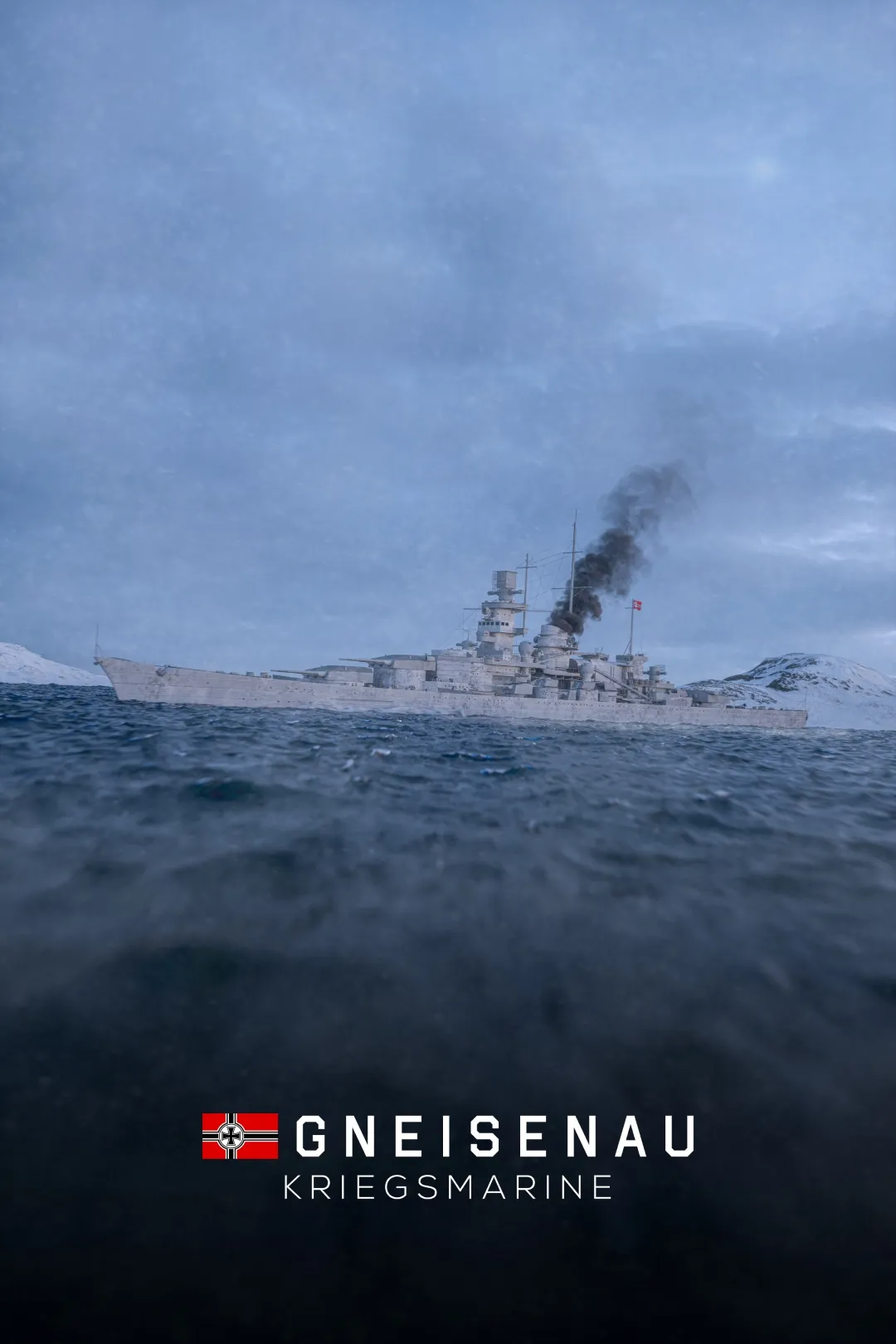
German Battleship Gneisenau Poster
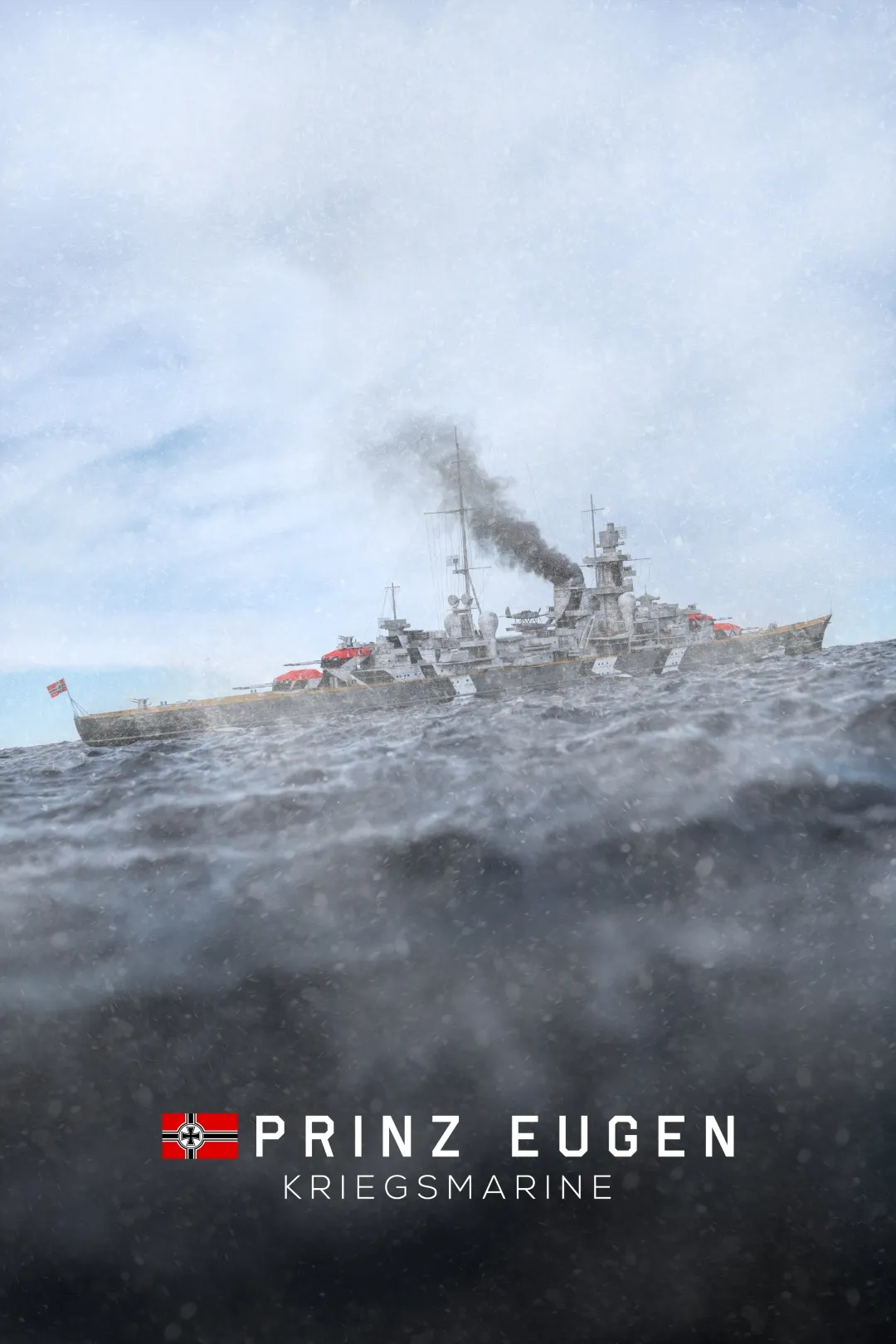
Gneisenau was one half of a deadly partnership. Together with her sister Scharnhorst she formed a pair of fast, handsome capital ships — armed with nine 283 mm guns and capable of better than 30 knots — that prowled the northern seas and the Atlantic in the early years of the war, striking where they were least expected and vanishing before the Royal Navy could close the trap. British sailors called them the "ugly sisters," but there was nothing ugly about them; they were elegant, dangerous, and maddeningly hard to catch. Their reign of disruption began in earnest during the Norwegian campaign of 1940. In June of that year, off the coast of Norway, the two ships caught the British aircraft carrier HMS Glorious and her two escorting destroyers almost defenceless. In a devastating long-range action they sank all three, one of the Royal Navy's bitterest losses of the war — though one of the doomed destroyers, Acasta, scored a torpedo hit on Scharnhorst before she went down, a reminder that even these raiders could bleed. Then came Operation Berlin in early 1941, when Gneisenau and Scharnhorst swept into the Atlantic under Admiral Lütjens and ran wild among the convoy routes, sinking or capturing 22 Allied merchant ships before slipping into the French port of Brest. At Brest, the hunters became the hunted. Penned in port and battered by relentless RAF bombing, the two ships became a magnet for British attacks. Rather than risk losing them by inches, the Germans gambled on one of the most audacious operations of the war: the "Channel Dash" of February 1942. In broad daylight, Gneisenau, Scharnhorst and the cruiser Prinz Eugen raced up the English Channel — right beneath Britain's nose, through her own home waters — and reached German ports almost untouched. It was a brilliant feat of planning and nerve, and a profound humiliation for the Royal Navy and the RAF, who had failed to stop a German battle squadron from sailing past the white cliffs of Dover. But Gneisenau's luck ran out almost immediately. Shortly after reaching Germany, while she lay in dock at Kiel, an RAF bomb struck her forward section and detonated a magazine. The explosion tore through her bow and gutted her interior, killing many of her crew and inflicting damage so severe that repair was scarcely worthwhile. There were grand plans to rebuild her with even larger guns, but they came to nothing as the war turned against Germany. Stripped of her main armament and finally scuttled as a blockship at Gotenhafen in 1945, the proud raider ended not in a blaze of glory at sea but in slow, ignominious decline in harbour. It was a strange fate for a ship that had sunk a carrier and terrorised the Atlantic — to be undone not by an enemy fleet but by a single bomb in the supposed safety of her own port. Yet that, too, is part of her story: the fearsome raider whose career of speed and surprise ended in stillness and rust. To reconstruct Gneisenau is to remember the partnership that gave the Royal Navy nightmares, and the thin line between triumph and ruin in the war at sea.