HMS Hood Poster
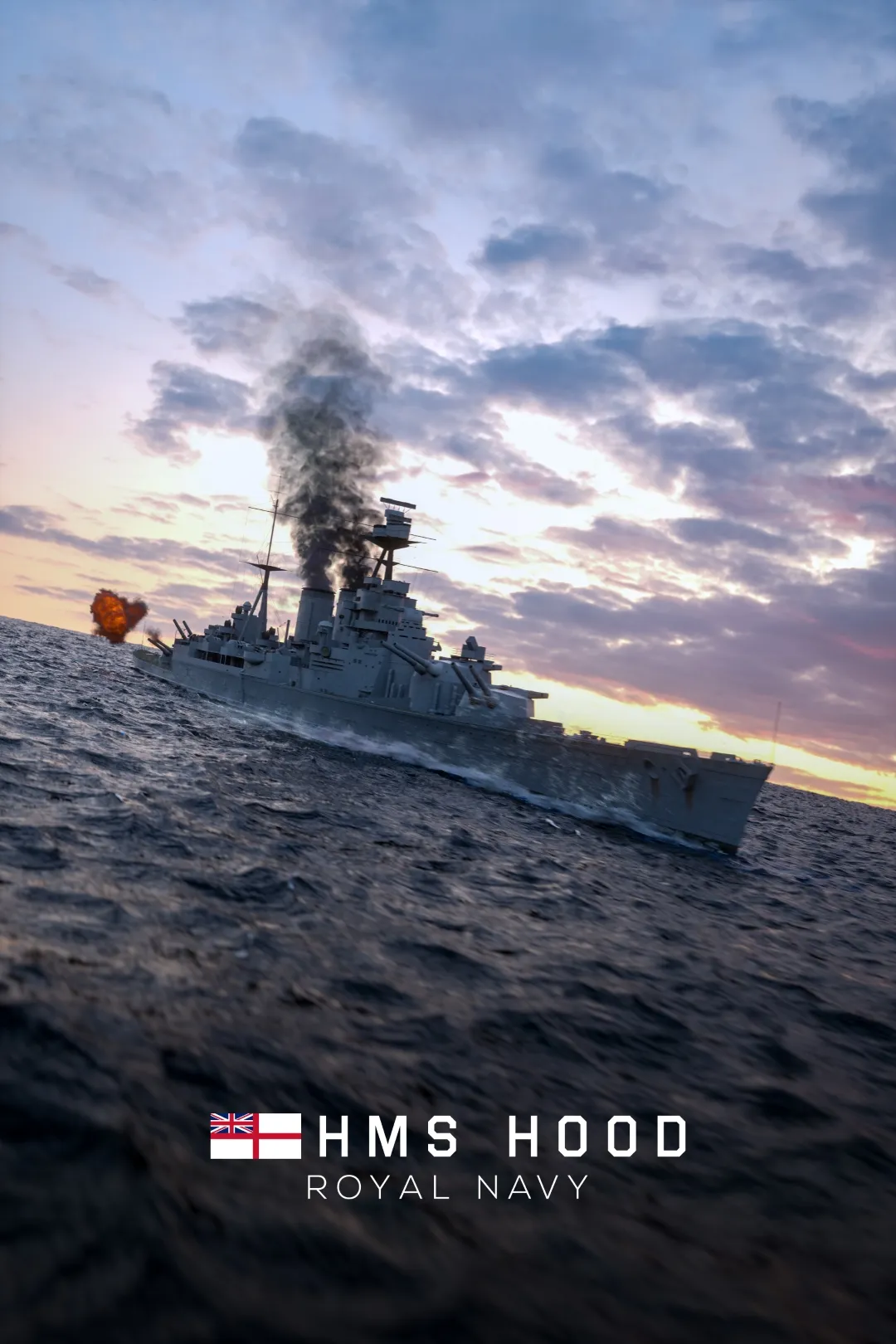
For twenty years she was the most famous warship in the world — "The Mighty Hood," the pride of the British Empire, a battlecruiser so long and graceful that she seemed less a machine of war than the very embodiment of British sea power. Between the wars she cruised the globe, showing the flag in ports from Rio to San Francisco, and to a generation of sailors and citizens alike she was simply invincible, a symbol as solid and permanent as the Empire she represented. But beneath the glamour lay a fatal flaw. Hood was a battlecruiser, and battlecruisers were built for speed, trading armour for the power to run down lighter ships and outrun heavier ones. Her belt armour was respectable, but her deck armour — the protection against shells plunging down from long range — was thin, and it shielded her magazines inadequately. Plans to rebuild and properly armour her were drawn up between the wars, but they were repeatedly postponed, and when war came in 1939 she went to sea with the weakness still unhealed, an old design carrying a new conflict's expectations. The reckoning came in the Denmark Strait on the morning of 24 May 1941. Hood, the most celebrated ship in the Royal Navy, led the new battleship Prince of Wales out to intercept the German battleship Bismarck and the cruiser Prinz Eugen as they tried to break out into the Atlantic. The two sides opened fire across the cold grey water at long range, and within minutes the unthinkable happened. A salvo from Bismarck — a plunging shell that almost certainly pierced Hood's thin deck armour — found her after magazine. A vast column of flame shot hundreds of feet into the sky. The Mighty Hood was torn apart by a colossal explosion and broke in two, sinking in barely three minutes. Of her 1,418 men, only three survived. The shock to Britain was profound and personal, as if a piece of the nation itself had been ripped away in an instant. The most powerful symbol of the Royal Navy had been destroyed in minutes by a single enemy salvo, and the news swept through the country like a death in the family. It also unleashed something relentless. The loss of the Hood triggered the furious, all-out hunt that ended just three days later in the destruction of the Bismarck herself — vengeance exacted across the breadth of the Atlantic. Hood was avenged, but she could never be replaced in the public heart. Her wreck was found in 2001, lying shattered nearly 2,800 metres down in the Denmark Strait, and the site is now a protected war grave, watched over in memory of the men entombed there. To this day the Hood Association keeps her memory and that of her crew alive. To reconstruct HMS Hood is to capture a beautiful giant at the peak of her fame, just before the moment that ended her — the proud, doomed battlecruiser whose loss stunned an empire, whose destruction launched one of history's great sea chases, and whose name still stirs deep emotion among those who remember the Royal Navy's most beloved lost ship.