HMS Belfast Closeup Poster
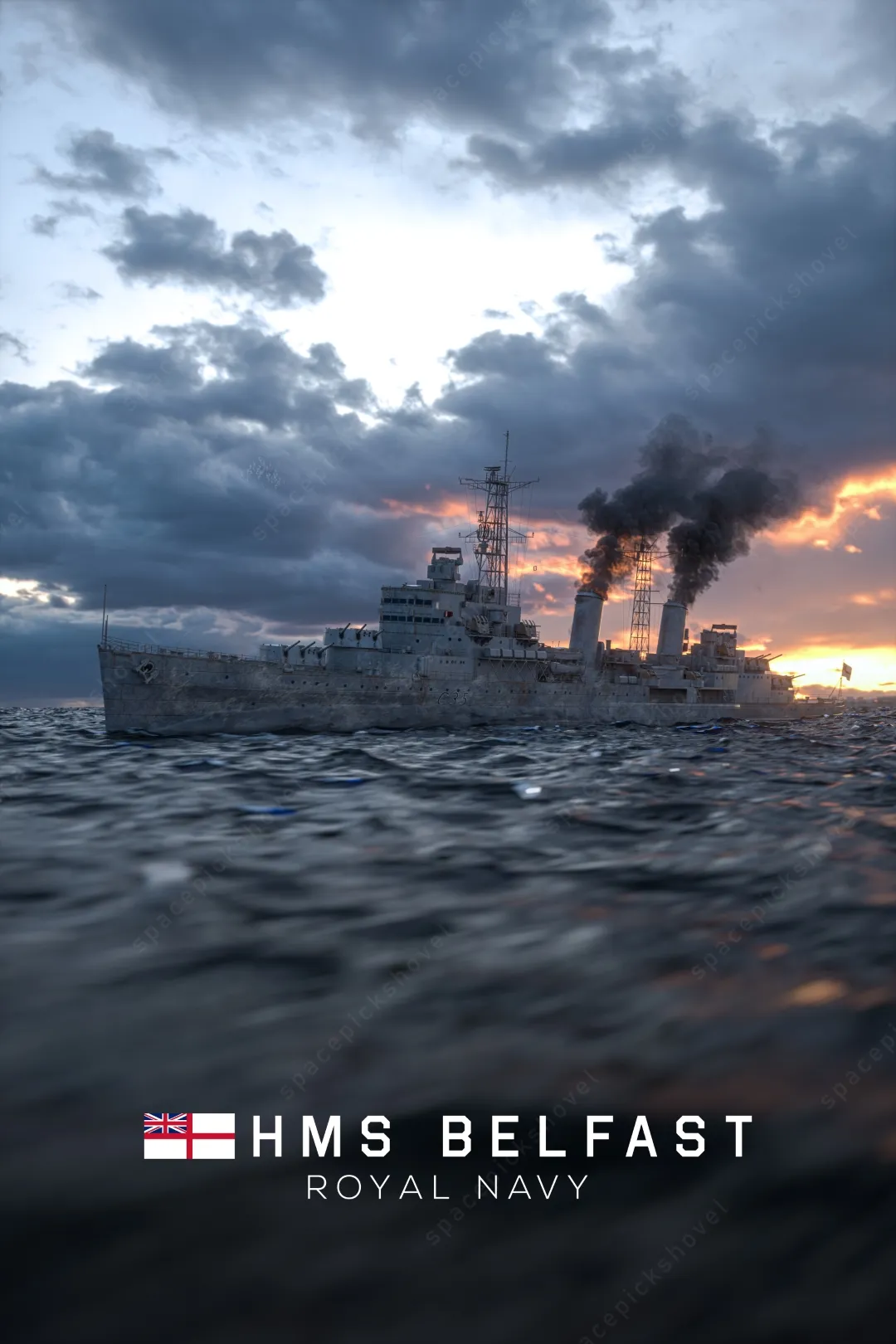
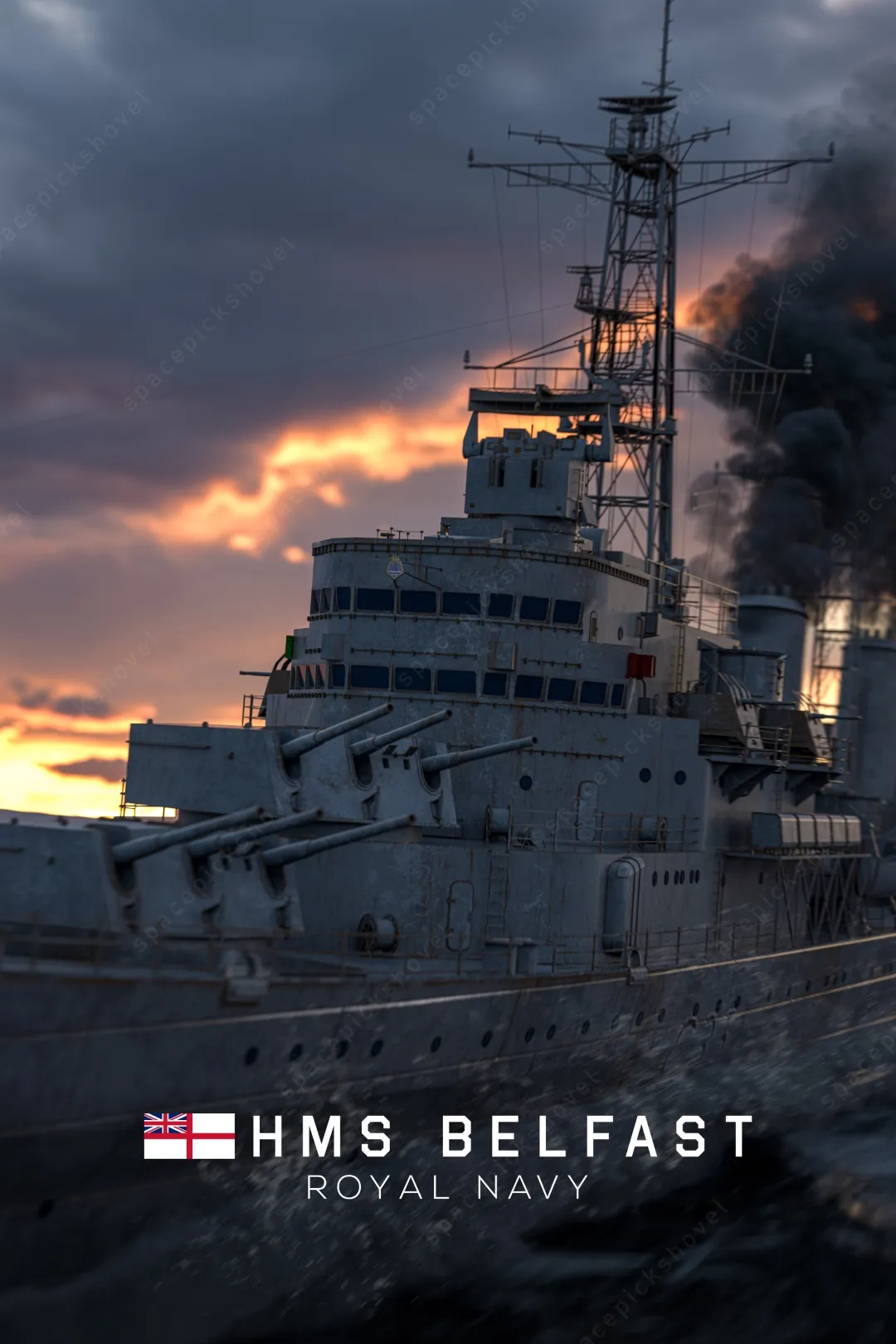
Stand close to HMS Belfast and the scale of her hits you all at once — the towering main gun turrets, the bristling anti-aircraft mounts, the rangefinders and radar aerials that once stalked an enemy battleship through Arctic darkness. This is a warship best understood up close, where every rivet, ladder and gun barrel carries the weight of the battles she fought and survived. To zoom in on Belfast is to read the working anatomy of a Second World War cruiser. She was a Town-class light cruiser of the Royal Navy, and her main armament — twelve 6-inch guns arranged in four triple turrets — could throw a storm of steel out to nearly twelve miles. Those guns spoke in the defining moments of her career. At the Battle of the North Cape in December 1943, her radar tracked the German battleship Scharnhorst through the polar night, guiding the British fleet to the kill, and her shells joined the action that sent the raider to the bottom. On the morning of D-Day, 6 June 1944, those same turrets opened the bombardment of the Normandy beaches, their muzzles flaming as the troops went ashore below. Up close, the ship reveals how she actually worked. The armoured conning tower from which she was fought in battle; the cramped fire-control positions where men calculated range and bearing by hand and instrument; the bridge wings, searchlights, signal lamps and boats; the directors and rangefinders perched high above the deck, feeding information down to the guns. Every detail was shaped by a single purpose — to find the enemy, to hit him before he hit you, and to survive being hit in return. Belfast did all three. Early in the war a magnetic mine nearly broke her in half; rebuilt stronger over almost three years, she returned to become one of the most capable cruisers in the fleet, and went on to serve through the Korean War in the 1950s. There is a particular fascination in seeing a warship at this intimate scale rather than as a distant silhouette. The grey steel that looks smooth and simple from afar resolves, up close, into a dense, purposeful landscape of machinery: layered, riveted, weathered, every fitting there for a reason. It is the difference between knowing that a cruiser carried twelve 6-inch guns and standing beneath one of those barrels and feeling how enormous and deadly it truly is. Saved from the scrapyard and preserved on the River Thames in London since 1971, HMS Belfast lets visitors do exactly that — climb among her guns and decks and machinery, and grasp the reality of the men who lived and fought inside this steel world. As a branch of the Imperial War Museum she welcomes millions, the last big-gun warship of Britain's wartime navy still afloat and accessible. To reconstruct Belfast in close-up is to celebrate that texture and detail — the turrets, directors and superstructure rendered as the intricate, fascinating machine they really are. It is a portrait not of a ship at a distance, but of a warship you can almost reach out and touch, every gun still trained out over the river as if waiting for one more call to action.