The Story of Turkish Battlecruiser TCG Yavuz
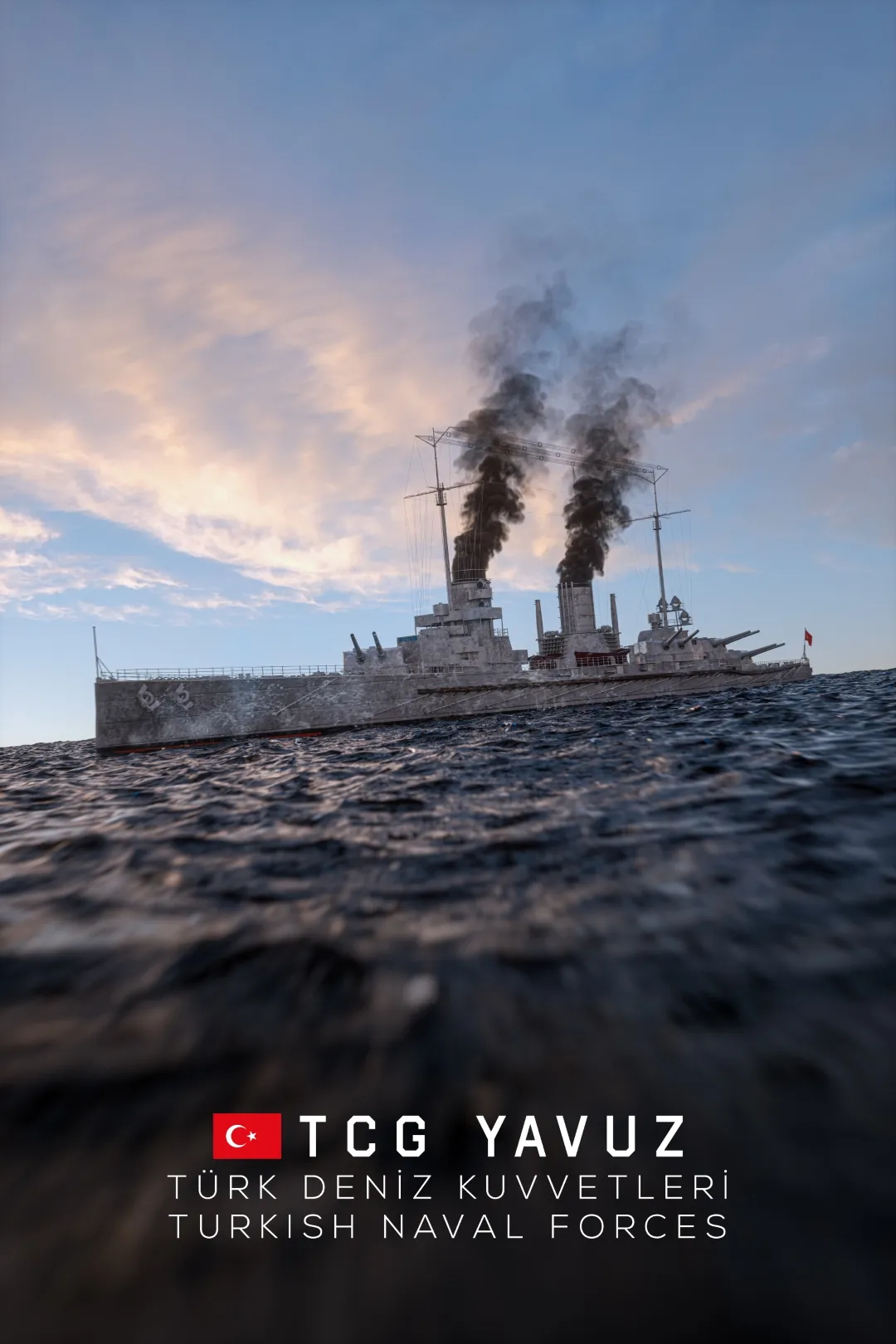
Few warships have lived two lives as dramatic as this one. She was born German, as the battlecruiser SMS Goeben, and she died Turkish, as the TCG Yavuz, flagship and pride of the Turkish navy for nearly half a century. In between, she helped drag an empire into a world war and outlived almost every other ship of her age — a single hull that spanned the dreadnought era from its dawn to its very end. In the opening days of the First World War in 1914, Goeben and her companion cruiser Breslau were caught in the Mediterranean and hunted by the Royal Navy. In a famous and audacious dash, they evaded their pursuers and escaped eastward to neutral Constantinople. To resolve the awkward diplomatic crisis their arrival created, Germany formally "transferred" the ships to the Ottoman Empire, and Goeben became Yavuz Sultan Selim — though she kept her German crew and her German admiral. Then, in October 1914, flying the Ottoman flag, she steamed into the Black Sea and bombarded Russian ports. That act of war pulled the Ottoman Empire into the conflict on the side of Germany, changing the course of history across the Middle East and beyond. Throughout the war she fought the Russian Black Sea Fleet, dueling enemy battleships, surviving mines and shellfire, and remaining a constant, elusive threat that the Russians could never quite pin down. She was, almost single-handedly, the Ottoman Navy's principal capital ship, and her presence shaped the entire naval war in the Black Sea. When the Ottoman Empire collapsed and the modern Turkish Republic rose from its ashes under Mustafa Kemal Atatürk, the old battlecruiser was retained, refitted and renamed simply Yavuz — and she became the flagship of the new nation's navy, a symbol of continuity and strength for the young republic. For decades she served as the embodiment of Turkish naval power, showing the flag and anchoring the fleet. In 1938 she carried out one final, solemn duty: when Atatürk, the founder of the republic, died, it was Yavuz that bore a central role in the national mourning, helping to carry his memory with the dignity of the state. She remained in service into the 1950s, by then a venerable relic — the very last surviving warship of the great dreadnought age that had begun before the First World War, outliving every other capital ship of her generation in the world. She was finally stricken and, after the Turkish government's offer to preserve or sell her came to nothing, scrapped in the early 1970s — the last of her kind, a German-built giant that had become an enduring Turkish legend. To reconstruct TCG Yavuz is to capture a ship of two nations and two eras — the German battlecruiser that helped bring the Ottomans into the First World War, reborn as the proud flagship of the Turkish Republic, and the final survivor of the dreadnought age. Few hulls ever carried so much history, or bridged so completely the world that built them and the one that outlived it.
Reconstruction Pipeline
Frequently Asked About Turkish Battlecruiser TCG Yavuz
What was the TCG Yavuz?
Originally the German battlecruiser SMS Goeben, transferred to the Ottoman Empire in 1914. She later became flagship of the Turkish Republic's navy as Yavuz.
Why is the Yavuz historically important?
In October 1914 she bombarded Russian Black Sea ports, an act that drew the Ottoman Empire into the First World War on Germany's side.
What happened to the Yavuz?
She served the Turkish navy for decades — the last surviving dreadnought-era warship in the world — before being scrapped in the 1970s.