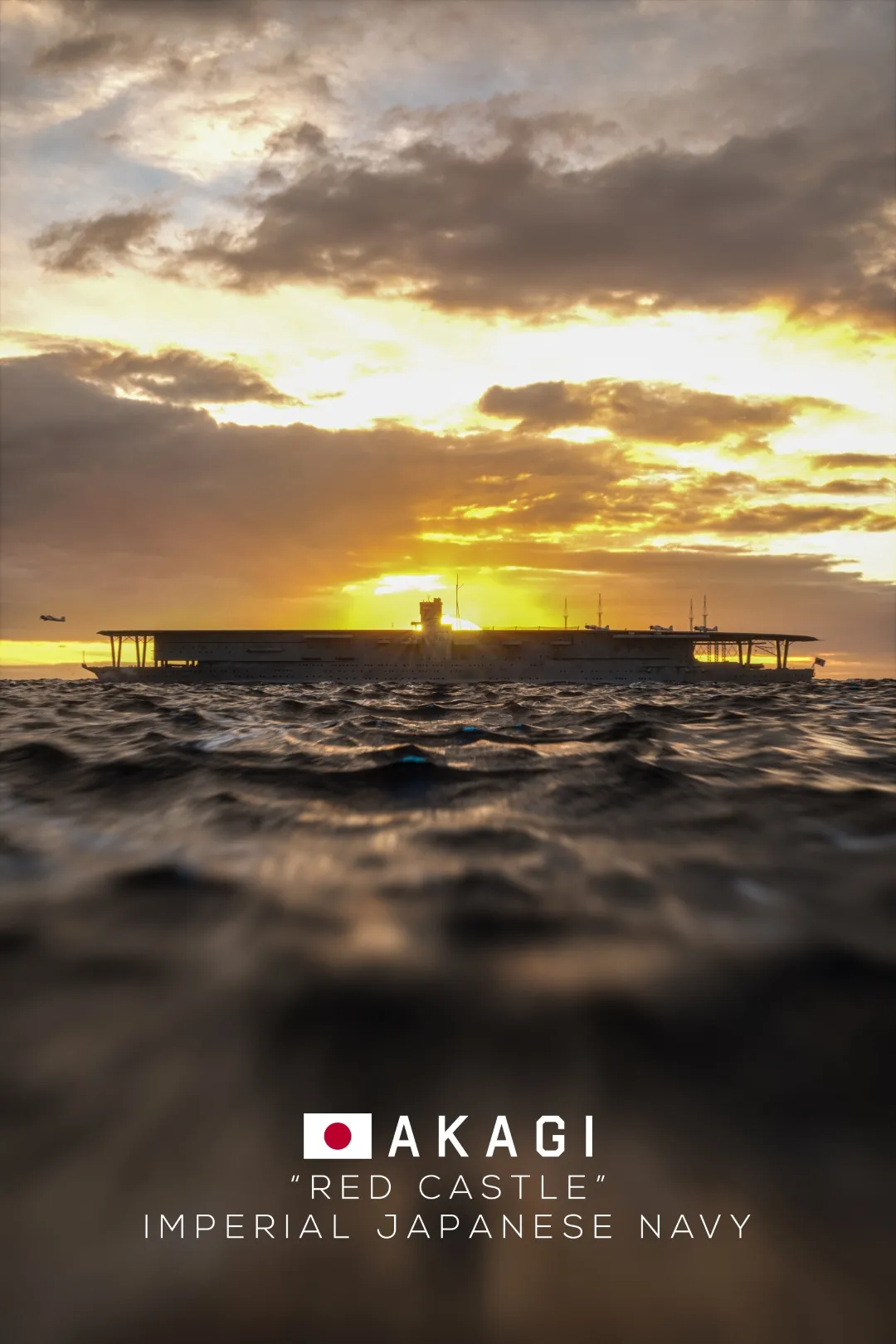
IJN Akagi Poster
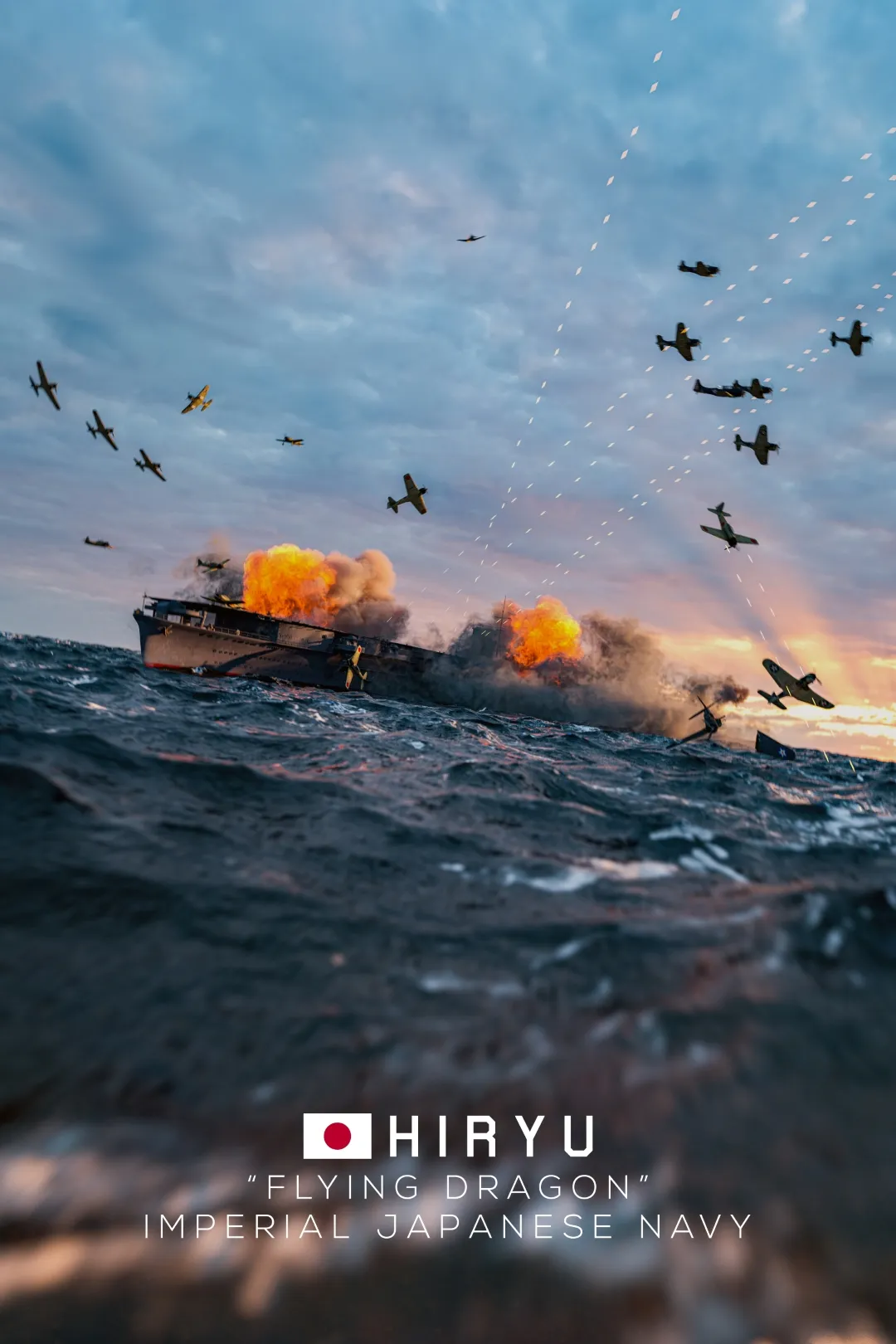
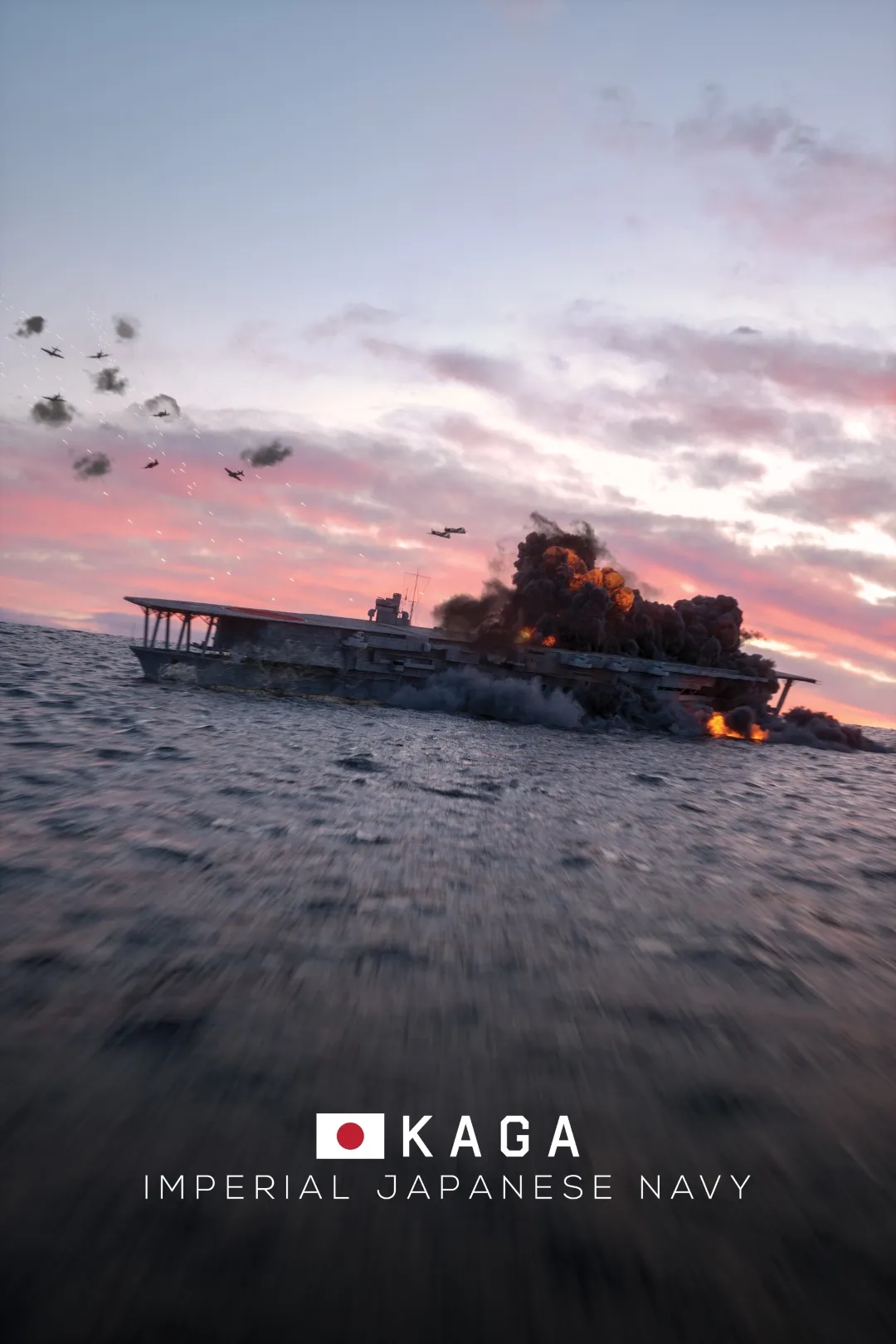
She was the flagship of the most powerful carrier force the world had yet seen — and her death marked the turning of the entire Pacific War. IJN Akagi began life as a battlecruiser hull, laid down in an age of big-gun ships, then was converted into a mighty aircraft carrier as naval aviation came of age. By 1941 she was the proud flagship of Vice Admiral Chuichi Nagumo's Kido Butai, the elite First Air Fleet — the spearhead of Japanese naval power and the most formidable concentration of carrier striking force on earth. It was from Akagi's deck, on the morning of 7 December 1941, that aircraft thundered into the sky to help lead the attack on Pearl Harbor, the blow that plunged the United States into the war. In the half-year that followed, Akagi and her sisters seemed unstoppable. They rampaged across the Pacific and into the Indian Ocean, striking Darwin in Australia, raiding Ceylon, sinking Allied warships and merchantmen from Hawaii to the coast of Asia. For six months the Kido Butai knew nothing but victory, ranging almost at will across a third of the globe. Then came Midway, and the morning that destroyed her. In June 1942 Akagi sailed at the head of four fleet carriers in an operation meant to crush the remaining American fleet — but the Americans had broken the Japanese codes and were lying in wait. On the morning of 4 June, in the space of a few catastrophic minutes, everything changed. American dive bombers from the carrier Enterprise plunged out of the sun onto the Japanese carriers, whose decks were crowded with aircraft fuelled and armed for a strike, ordnance and fuel lines lying everywhere in the rush to rearm. A single bomb struck Akagi near her midships elevator, and it was enough. It ignited the packed, fuelled, bomb-laden aircraft on her hangar deck, and the fires that erupted were beyond any hope of control. The great flagship became a roaring inferno from within, her crew fighting and dying in the smoke as explosions tore through her. By the following day she was a blazing, gutted hulk, drifting and doomed, and the Japanese were forced to scuttle her with their own destroyers' torpedoes to keep her from falling into enemy hands. In a single morning at Midway, Japan lost four irreplaceable fleet carriers — Akagi, Kaga, Soryu and Hiryu — and with them the cream of her naval aviators and the strategic initiative in the Pacific. The tide of the war had turned, and it would never turn back. Akagi's wreck was discovered in 2019, lying nearly 5,400 metres down on the floor of the Pacific near Midway, found by the research vessel Petrel. To reconstruct IJN Akagi is to capture the flagship at the summit of her power — the carrier from which the Pearl Harbor strike was launched and the Kido Butai was led to victory after victory — frozen in the moment before the catastrophe at Midway that consumed her and changed the course of the war. Few ships rose so high or fell so fast.